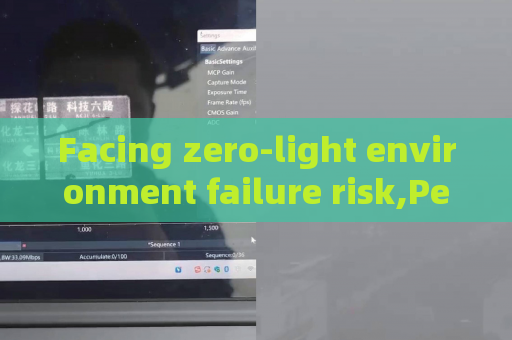
Facing zero-light environment failure risk, Penetrating Imager adopts Zero-light Imaging to ensure all-weather police duty A patrol officer responds to a silent alarm in a parked vehicle compound at 2 a.m. The target sedan sits under a broken streetlight, its tinted windows reflecting nothing but darkness. Standard flashlights and night-vision devices fail to reveal whether a suspect is slumped inside, reaching for a weapon, or already gone. In this zero-light environment, every second of uncertainty translates into tactical danger. The officer cannot safely approach the driver-side window for a direct visual check, because that movement would expose the torso to a potential ambush. The core problem is not the absence of light—it is the inability to see through the vehicle glazing without becoming a target. Conventional imaging tools either wash out under glare or produce only a dark mirror image of the surrounding night. The Penetrating Imager solves this specific failure mode through Zero-light Imaging, a capability built on laser range-gated technology. The system fires a high-repetition pulsed laser toward the target, while the intensified gated camera opens its shutter only for the exact time interval when reflected light returns from the chosen distance. This gating mechanism rejects backscatter from rain, mist, or atmospheric particles and, more critically, allows the optical sensor to collect reflected light from the scene through the glass, not from the glass surface. Because the imager is an active optical system with its own illumination source, it does not rely on ambient moonlight or street lamps. In a pitch-black parking lot, the operator can still obtain a high-contrast, real-time image of the vehicle interior through the side window or windshield, without any visible light that would alert the occupant. During a tactical approach, the officer activates the Penetrating Imager from a covered position roughly twenty meters away. The device produces a clear monochrome image showing the front seats, the steering wheel, and the rear bench. The suspect’s silhouette becomes visible against the faint reflection of the dashboard. Because the system uses a narrow laser pulse synchronized with the camera gate, the operator can adjust the range window to focus specifically on the cabin depth, eliminating reflections from the outer glass pane. This through-window tactical observation lets the officer confirm whether the subject’s hands are empty or holding a metallic object. The conversation then shifts from a blind gamble to a deliberate, informed decision: call for backup, issue a verbal command, or reposition to a safer angle. In the same zero-light scenario, the Penetrating Imager continues to provide value after the initial assessment. If the suspect remains motionless, the officer can use the imager to monitor subtle chest movements or shifts in posture through the glass, maintaining constant surveillance without switching on a bright flashlight that would destroy night adaptation. The device also works when the vehicle’s interior is completely dark, or when the windows are heavily tinted, because the laser illumination is not dependent on external brightness. This all-weather capability ensures that police duty does not stop at sunset or degrade under failing street lighting. The Penetrating Imager, strictly an optical instrument using light reflection and gated imaging, does not claim any ability to see through body panels or closed trunks—it only sees through the transparent glass areas that are precisely the zones where threats are often concealed. By turning a zero-light failure risk into a clearly visible tactical picture, the tool restores the officer’s greatest advantage: information.




