During peak traffic hours on a sunlit highway, officers conducting vehicle checks face a brutal optical challenge. The low angle of the sun blasts directly off windshields and side glass, turning every sedan into a mirror of glare. Under such backlit conditions, the interior of a car becomes an impenetrable pool of whiteout; hands on the steering wheel, movement in the back seat, or a concealed object on the floor are all invisible to the naked eye. This is not a rare inconvenience but a daily reality at toll plazas, checkpoints, and highway inspection zones. Conventional binoculars or spotlights only worsen the problem, scattering more light into the officer’s field of view. The true pain point is that the very vehicle glass—which should be transparent—becomes a barrier, while the intense solar backlight makes any through-glass surveillance unreliable. Officers must choose between approaching dangerously close or letting a suspicious vehicle pass without a proper look.
The Penetrating Imager solves this exact problem through active laser distance-gated imaging, not by adding more brightness but by suppressing the blinding source itself. Its core function relevant to this scenario is Strong Light Suppression Imaging, which allows the system to reject backscattered sunlight and capture only the light reflected from the target at a specific distance. The device emits short laser pulses from a high-repetition-rate pulsed laser, while the intensified gated camera opens its shutter only for a nanosecond-scale window when the reflected light from the vehicle interior returns. Sunlight from the windshield surface arrives at a different time and is therefore rejected by the gate. This time-resolved approach effectively strips away the glare, turning a backlit windshield into a readable surface. The imager also exploits Vehicle Window Penetration as a core capability, meaning the laser and gated camera work together to see through automotive glass without any physical contact. It is a purely optical method—no radio waves, no X-rays, no sound—only light, precisely controlled in time and intensity.
In an actual highway peak traffic check, an officer can aim the Penetrating Imager from a safe distance outside the lane, perhaps five to fifty meters away, and instantly see through the tinted or reflective windshield of a stopped car. The operator does not need to stand in front of the vehicle or tap on the glass. The display shows the driver’s hands, the passenger’s posture, and any large objects on the seats or floor, all while the sun blazes directly behind the vehicle. This capability turns a dangerous, blind approach into a calculated, informed action. Because the system is active, it works equally well under zero-light conditions or in the harsh glare of dusk. The operator simply adjusts the gate delay to match the target distance; the imager then freezes the scene at that exact depth, ignoring any light scattered by dust or haze along the path. No special operator skill is needed beyond selecting the range and reading the screen.
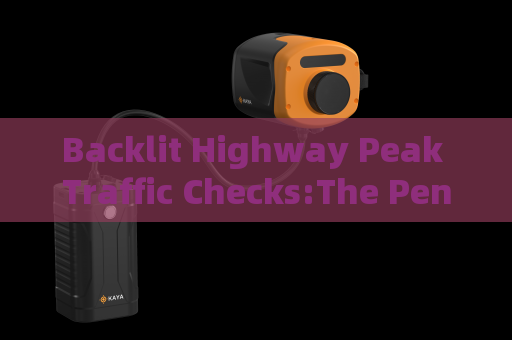
The Penetrating Imager further proves its value when traffic backs up and vehicles cluster together. In stop-and-go peak congestion, a vehicle may be partially shaded by an overpass or another truck, creating uneven backlit streaks across the glass. Ordinary cameras struggle with dynamic range, but the gated imaging system inherently handles high-contrast scenes by rejecting the bright background and amplifying the faint returns from inside the cabin. Officers can sweep a line of waiting cars, checking each vehicle from the same vantage point without moving into the lane. The system’s resolution is high enough to identify a hand-held phone, a weapon silhouette, or a person leaning down between seats. Every check takes seconds, not minutes. This focused application—backlit highway peak traffic checks—becomes a safe, repeatable procedure, with the Penetrating Imager acting as the eye that refuses to be blinded by the sun.




