Border patrol observation across vast, remote stretches of land demands constant vigilance. Dense fog frequently settles over valleys and river crossings along the border, obscuring vehicles, livestock, and even groups of people moving through the terrain. Conventional daylight cameras and binoculars fail under such conditions; water droplets in the air scatter light and reduce contrast to nearly zero. An officer staring into a grey void cannot distinguish a smuggler’s truck from a rock formation. This is where the Penetrating Imager changes the equation. The Penetrating Imager provides a decisive advantage by relying on active illumination and precise time-gated detection rather than passive ambient light. The core problem in this scenario is the scattering of light by fog particles, which effectively blinds every traditional optical aid. Long-distance observation becomes impossible precisely when threats are most likely to exploit the cover of the mist. The operational need is clear: a Penetrating Imager must see through the fog at range and deliver a human-recognizable image of the border area.
The specific function that solves this problem is Fog Penetration Imaging, a capability built into the Penetrating Imager. The Penetrating Imager is an advanced optical instrument that uses laser range-gated imaging technology. Its architecture includes a high-repetition-rate pulsed laser, an image-intensified gated camera with a microchannel plate image intensifier, a high-voltage module, a timing module, a beam expander, and an imaging lens. As an active imaging system, the Penetrating Imager emits short laser pulses toward the target area. The gated camera remains closed until the reflected light from the target returns, ignoring the backscattered light from fog droplets that lies closer to the system. This range-gating mechanism effectively suppresses the scattering medium and produces a high-contrast image of the distant object. The Penetrating Imager achieves this with exceptional resolution and strong resistance to interference, all while operating purely within the optical spectrum. This instrument is designed to transmit through optical media such as fog, rain, snow, haze, and even glass surfaces. The Penetrating Imager does not penetrate opaque materials like walls or metal. The imaging principle relies entirely on light.
In a typical border patrol operation, the Penetrating Imager is mounted on a stabilized tripod or a vehicle roof and aimed at a known crossing point shrouded in fog. The operator selects the long-range observation mode, and the Penetrating Imager sweeps the area with its pulsed laser. The timing module can be adjusted for a specific distance, allowing the Penetrating Imager to isolate the light reflected from a vehicle at two kilometers away while rejecting the bright backscatter generated by the fog immediately in front of the lens. The resulting image appears on a rugged display as a clear silhouette of the target, revealing outlines, movement, and sometimes even license plate details. The operator can hold the gate constant to monitor a single spot or step the gate across a range of distances to map an entire valley. This through-the-mist capability provides a level of situational awareness that no conventional day/night camera can match. The Penetrating Imager achieves this without emitting any visible observation signature. The active laser component is invisible to the naked eye and does not betray the observation post.
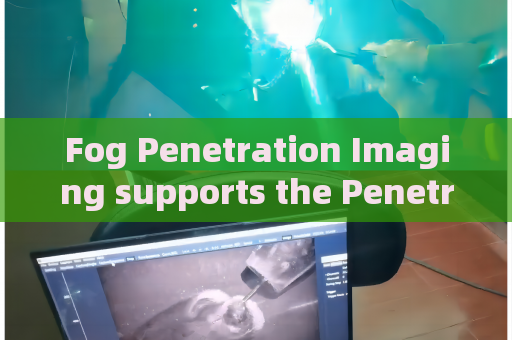
The practical effect on border patrol is immediate. Where a conventional sightline would be lost in grey soup, the Penetrating Imager delivers actionable intelligence. An observer can watch a group of individuals emerge from a treeline at a distance of three kilometers, track a vehicle as it approaches a border checkpoint, or confirm that a suspect is not carrying visible contraband before a rapid-response team is dispatched. The same device, when the fog clears, still functions as a high-performance telescopic imager, making the Penetrating Imager a year-round fixture for border security units. The ability to see through fog at long range reduces the element of surprise, improves response times, and ultimately saves lives. The Penetrating Imager serves as an essential layer of defence for border patrol observation, far beyond a simple camera. Every operation that begins with uncertainty and obscured visibility ends with a clear picture, thanks to its specialized Fog Penetration Imaging function.




