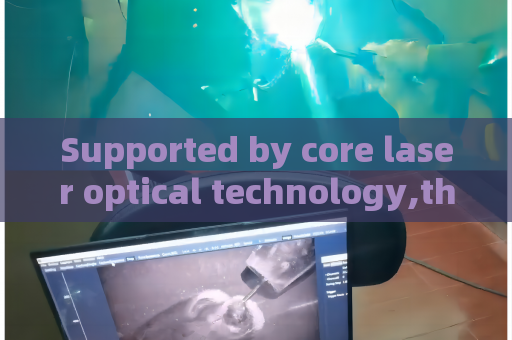
Supported by core laser optical technology, the Penetrating Imager acquires clear images behind military vehicle windshields. A military checkpoint presents a uniquely difficult visual challenge. A suspicious vehicle approaches with tinted, angled, or reflective automotive glass that turns the interior into a dark, distorted void. Conventional optics fail against the combined effects of glare from ambient light, the vehicle’s own dashboard reflections, and the strong contrast between sunlit exterior surfaces and shadowed cabin spaces. An operator needs to know who is inside, what their hands are doing, and whether a weapon is visible—yet the windshield acts as an optical barrier that defeats standard cameras and binoculars. The real problem is not simply darkness behind glass; it is the blinding interplay of reflected light and scattered background illumination that destroys image detail at the very moment when tactical clarity matters most. The through-window tactical observation capability of the Penetrating Imager directly addresses this scenario. This active imaging system employs laser distance gating technology to synchronize a high-repetition-rate pulsed laser with an intensified gated camera. By emitting short laser pulses and opening the camera shutter only when light reflected from the target plane returns, the system rejects scattered light from the windshield surface and the atmosphere. This temporal gating suppresses strong reflections and backscatter, allowing the imager to capture a high-contrast picture of the vehicle’s interior through the glass. The device functions purely within the optical domain—no rays, no radiation, no sound—just precisely timed light. Its ability to overcome glare and see through automotive glazing makes it a practical tool for covert observation of a stationary or slowly approaching military vehicle. In field use, an operator aims the Penetrating Imager at the windshield from a concealed position. The system automatically adjusts gate timing and laser pulse parameters to match the distance to the vehicle, which can be several hundred meters away. Within seconds, a clear, real-time image appears on the display, revealing the driver’s posture, the passenger seating arrangement, and any objects held on laps or wedged between seats. Unlike passive cameras, the imager does not wash out when headlights or sunlight strike the glass at a sharp angle. Its high-resolution output enables facial recognition and the identification of small items such as a phone or a pistol grip. The imaging process is silent and works in both daylight and darkness, giving tactical teams a decisive information advantage before any physical approach is made. A practical detail is the operational loop during an approach scenario. As the suspect vehicle rolls to a halt, the imager continues to track the cabin through the windshield, even when the engine is off and interior lighting is absent. Under Low-light Imaging conditions, the gated laser illuminates the scene without alerting the occupants—the laser pulse is invisible to the naked eye and reflected light is only collected during the ultra-short gate window. The operator sees a clear picture of hands leaving the steering wheel or moving toward a door panel. This continuous, through-glass surveillance transforms a high-risk unknown into a verified threat assessment. The Penetrating Imager does not see through walls or clothing; it sees through the optical medium that matters most at the checkpoint: the windshield of a military vehicle.




