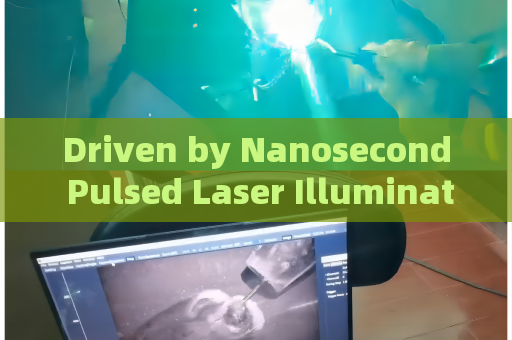
Driven by Nanosecond Pulsed Laser Illumination, the Penetrating Imager boosts imaging definition in field police reconnaissance. Field police reconnaissance frequently reaches a point where a vehicle becomes both a shield and a blind spot. A subject staying inside a car can observe the surroundings while remaining hidden behind glass that reflects sky light, road light, or the shine of nearby buildings. Factory privacy glazing and aftermarket tint add a second layer of opacity, turning the cabin into a dark void. For an officer dispatched to check a suspicious vehicle, the inability to see the driver’s hands or the back seat area is a serious tactical problem. Approaching without this knowledge invites ambush. Moving closer to peer through the glass may reveal the officer’s intent and escalate tension. Waiting for the subject to exit consumes time and may allow evidence to be hidden. The Penetrating Imager was developed to remove this blind spot in a manner that respects the operational tempo of field police work. The technology relies on laser range-gated imaging, an active optical method. A high-repetition pulsed laser sends a short burst through a beam expander toward the target vehicle. The returning photons are collected by an imaging lens and an image intensifier gated camera, which contains a microchannel plate intensifier, a high-voltage module, and a timing module. The camera is electronically opened for a nanosecond-scale window aligned with the round-trip time of light from the seat or dashboard. This time gating rejects nearly all backscatter from the surface of the windshield, which is the main cause of blinding glare when ordinary cameras or eyes look through glass. The Penetrating Imager therefore sees through automotive glass, including laminated windshields and side windows, even when they are tinted or wet. Because the system is active and provides its own near-infrared illumination, it does not depend on ambient light. A tactical visual check through tinted windows can be performed from a safe distance, without pressing against the glass. The result is a high-contrast image with sufficient resolution to count occupants and identify hand positions. In a typical field operation, the Penetrating Imager is set up on a tripod behind the cover of a patrol car door or a low wall. The operator aims the imaging head at the target vehicle, adjusts the focus, and watches the screen. Within seconds, the number of occupants, their seating positions, hand placement, and loose objects on seats or floors become visible. This intelligence is acquired before any verbal warning is given. The officer can then choose to call for backup, position an arrest team, or approach with a clear plan. The Penetrating Imager also works in heavy rain, fog, or snow, as the gated exposure suppresses scattered light from these obstructing particles. Even strong oncoming headlights or harsh streetlamps fail to wash out the image, because the exposure window is only nanoseconds long and synchronized with the laser pulse. The same setup supports both daylight and zero-light operations, which makes it a versatile asset for night patrol and covert checks. The value of this capability becomes most evident during a routine traffic stop on a dim rural road. The stopped car has dark privacy glass, and the occupant remains still. A standard flashlight or a patrol car’s spotlight produces only a mirror-like reflection. With the Penetrating Imager, the officer confirms that the rear cabin is empty and the driver’s right hand stays on the steering wheel. This knowledge lowers the threat level and allows a calmer interaction. For surveillance, the Penetrating Imager can be placed inside a van or behind a hedgerow, providing through-glass covert observation of a person sitting in a parked car. The entire process uses reflected light only. There is no involvement of non-optical sensing modalities; the device emits laser pulses and captures the returning photons. The Penetrating Imager remains a purely optical tool, constrained to transparent barriers and atmospheric disturbances, and that is precisely why it fits the rules and ethics of field police reconnaissance. Its ability to turn nanosecond pulsed laser illumination into an instant, clear view of a vehicle interior is changing the way officers approach one of the most common but dangerous situations in daily duty.




