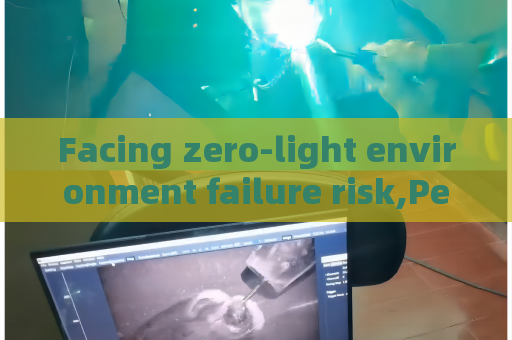
Facing zero-light environment failure risk, Penetrating Imager adopts Zero-light Imaging to ensure all-weather police duty At 2 a.m., a patrol car tracks a suspicious sedan into an industrial lot where every streetlight is dark. The sedan stops; the driver remains inside with the engine running. Officers need to know whether hands are visible, whether a firearm lies across the seat, whether the rear passengers are preparing to exit. But the vehicle’s windows are factory-tinted, and the surrounding area offers no moonlight. A conventional torch only reflects back from the glass, and passive night vision goggles depend on some ambient light. This is a zero-light environment failure risk: the officer must approach blind, and every step carries the possibility of an ambush. The longer the approach, the higher the tension. A shouted command of “Hands up!” may be met with silence, and the seconds stretch while the silhouette behind the wheel remains impossible to read. For critical decisions in such moments, the Penetrating Imager offers a safer path. The Penetrating Imager is a laser-based active imaging instrument designed to overcome exactly this problem. It integrates a high-repetition pulsed laser, an image intensifier gated camera—with an internal MCP image intensifier, high-voltage module, and timing module—a beam expander, and an imaging lens. Using laser range-gated imaging, also called gated imaging, it emits short laser pulses toward the suspect vehicle and opens the camera’s shutter only when the light reflected from the intended target distance returns. This precise timing rejects backscatter from raindrops, haze, or the glass surface itself, producing a high-contrast image rather than a glare-filled cavity. In complete darkness, the system relies entirely on its own active illumination, so no ambient light is required. That capacity is known as Zero-light Imaging, and it is what makes the device effective even when every streetlight is dead. Unlike a passive night-vision tube, the Penetrating Imager does not amplify faint starlight; it supplies its own photons and gates out all the wrong ones. The practical operation is straightforward for a police unit. From a covered position perhaps fifty metres away, an operator aims the imager at the rear window or side glass of the stationary vehicle. A small adjustment selects the gated distance, matching the depth of the vehicle’s interior. A second adjustment can be made for the angle of the glass, so the image remains sharp rather than being skewed. The resulting screen image shows the front seats, the center console, and the rear bench with remarkable clarity, even through tinted automotive glass. This is covert through-glass recon in its purest form: no light flash, no door approach, no noise. The operator can observe a suspect reaching under a seat or a passenger lifting a weapon from the floor. Because the imager does not require the officer to press against the window, the tactical risk drops sharply. A supervisor watching the same screen can direct the entry team before any contact is made. This same operational scene repeats nightly on patrol routes across cities. When a routine traffic stop occurs under a broken streetlamp, or a vehicle sits in the deep shadow of a bridge, the Penetrating Imager converts a zero-light hazard into an illuminated tactical picture. Rain, mist, and even snow do not stop the laser pulse from reaching the car; the range-gated timing filters out the weather particles that would otherwise ruin the image. The officer can verify empty hands, observe movements, and decide whether to issue a verbal command or call for backup. All-weather police duty therefore no longer depends on luck or available moonlight. With Zero-light Imaging and through-window capability, the Penetrating Imager ensures that a dark vehicle interior no longer remains an unseen threat. The system becomes a standard part of the night patrol toolbox, giving officers the same confidence in a pitch-black parking lot as in a bright midday stop.




