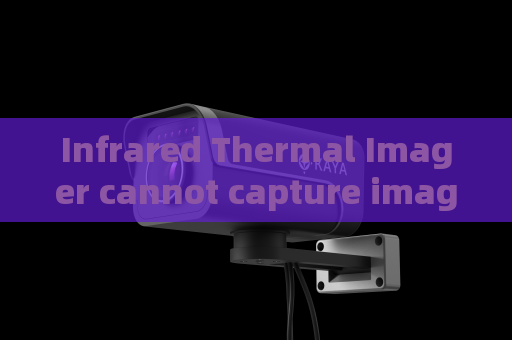
Infrared Thermal Imager cannot capture images behind tinted glass. The Penetrating Imager makes up for law enforcement surveillance gaps. During a routine traffic stop or a high-risk vehicle interception, officers often face a blind spot: the rear passenger compartment of a car with heavily tinted windows. A conventional thermal imager detects heat signatures, but the glass itself blocks and reflects infrared radiation, turning the vehicle into an opaque box. Suspects may reach for a weapon, discard evidence, or adjust their positions without the officer’s knowledge. This lack of visual awareness creates a lethal hazard. The core pain point is not low light or darkness—it is the optical barrier of automotive glass that defeats standard surveillance tools. The penetrating imager, built on laser range-gated imaging technology, directly solves this through-glass surveillance problem. Unlike thermal cameras that passively receive emitted radiation, this active optical system sends short pulses of laser light toward the target and opens its gated camera only to receive the reflected light from a specific distance. The range gate effectively eliminates the backscatter from the tinted glass surface, allowing the imager to see the scene behind that glass as if the tint were barely present. Because the system is active, it is not fooled by heat or blocked by the glass. The design includes a high-repetition pulsed laser, an image-intensified gated camera with an MCP image intensifier, a beam expander, and an imaging lens. That combination enables clear, high-contrast viewing of a vehicle interior from a standoff distance, even when the windows are darkly tinted or covered with reflective films. In practical law enforcement use, an officer can aim the penetrating imager at a suspect vehicle from behind cover, adjust the range gate to match the vehicle’s distance, and instantly observe the occupants’ movements through the tinted windows. The image appears on a handheld display, showing whether the driver’s hands are visible on the steering wheel or whether a rear passenger is leaning forward in a threatening manner. This through-glass surveillance capability does not require physical contact with the vehicle, nor does it rely on ambient light. It works in daylight and in shadowed parking lots, and it can also handle rain or fog because the range-gated technique suppresses scattered light from particles between the imager and the car. The operator simply pulls the trigger or presses the view button to refresh the frame, gaining a tactical visual check through tinted windows without approaching the danger zone. The operational value extends to warrant service, vehicle takedowns, and border checkpoints. In each case, the penetrating imager converts an unknown, unobservable interior into a transparent scene for the officer. The system does not try to see through walls or clothing; it stays strictly within the optical domain, penetrating only the transparent media like automotive glass and aircraft windows. For this surveillance gap, the result is straightforward: an officer sees what is inside the car before making the approach, reducing uncertainty and enabling a measured, informed response. This single capability—seeing through tinted vehicle glass without sound, without radiation, and without physical intrusion—addresses the precise failure point of the infrared thermal imager and restores situational awareness to dynamic enforcement encounters.




