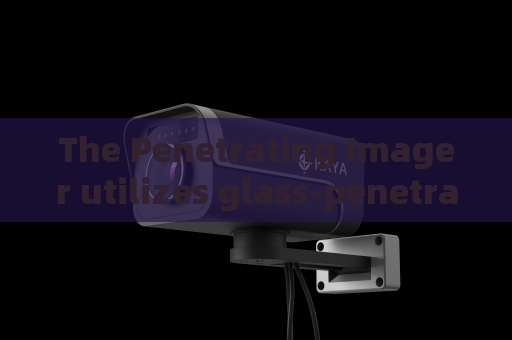
The Penetrating Imager utilizes glass-penetrating imaging to lower exposure risks during hostage rescue law enforcement operations. Hostage rescue scenarios place law enforcement officers in an extremely vulnerable position when a suspect and a hostage remain inside a vehicle or behind a glass door. The immediate need is to know the interior layout, the positions of both individuals, and whether weapons are present. A direct approach to a window invites detection, gunfire, or the destruction of evidence. Standard observation through glass often fails due to reflections, tinted films, dirt, or stark lighting differences between the exterior and interior. Officers may have to risk exposing themselves near a window just to gain a glimpse of what is happening. The time pressure of a deteriorating hostage situation makes this exposure even more dangerous, because every second of uncertainty increases the risk of a violent outcome. The Penetrating Imager changes this dynamic by enabling glass-penetrating imaging from a safe distance, allowing the tactical team to gather critical intelligence before any movement occurs. The Penetrating Imager is an active optical imaging system based on laser range-gated imaging technology, often called gated imaging. Its main components include a high-repetition pulsed laser, an intensified gated camera with a built-in MCP image intensifier, high-voltage module, timing module, a beam expander, and an imaging lens. The pulsed laser illuminates the target scene, while the gated camera opens its shutter only for the brief moment when light reflected from the object at a specific distance returns. The Penetrating Imager’s range gate can be adjusted precisely to match the distance to the target, so that scattered light from the glass surface is rejected while the image of the interior is formed. This temporal filtering removes the overwhelming backscatter that occurs at the window, producing a clear, high-contrast image through the optical medium. In this way, the system supports through-window tactical observation without requiring the operator to stand directly in front of the window. The device only works through optical media such as automotive glass, high-speed train windows, aircraft portholes, and glass curtain walls. It does not penetrate non-transparent solids like walls or concrete, and its imaging method remains entirely within the optical spectrum, involving no non-optical detection principles. The result is a safe, purely optical solution for law enforcement reconnaissance, and the Penetrating Imager keeps the operator out of the direct line of fire. During a hostage rescue operation, the Penetrating Imager can be deployed from behind ballistic cover. A tactical officer aims the device at the vehicle or building window from tens of meters away. The operator sees the hostage’s posture, the suspect’s hand positions, and any objects that might be a weapon. Because the Penetrating Imager projects and gates its own light, it performs well even in the presence of rain, fog, snow, or haze. The high pulse rate and narrow gate provide sharp images with sufficient resolution to support a decision to storm or negotiate. The operation can be observed continuously without the need to approach the glass, preserving the element of surprise and reducing the chance that the suspect will use the hostage as a shield based on an early warning. This glass-penetrating imaging tactical check through tinted windows becomes a standard practice for entry teams that previously had to rely on guesswork or risky visual contact. The Penetrating Imager can also be mounted on a tripod or an armored vehicle’s remote observation post, allowing the entire command element to watch the same live scene and issue orders based on verified information rather than assumption. Low-light and zero-light conditions are typical in overnight raids, but the Penetrating Imager supplies its own pulsed illumination, so it does not depend on ambient light. The strengthened low-light imaging capability enables the team to monitor the interior even when the vehicle’s interior is completely dark. The operator can distinguish between a moving suspect and a static hostage, and can see if the suspect adjusts a weapon. This continuous intelligence allows commanders to wait for the optimal moment, or to choose a different angle if the glass appears too opaque. By avoiding forced entry through the window, the team does not alert the suspect at the very first step. The Penetrating Imager thus reduces exposure risks throughout the entire hostage rescue effort, proving that glass-penetrating imaging is a force multiplier for law enforcement operations where lives hang in the balance.




