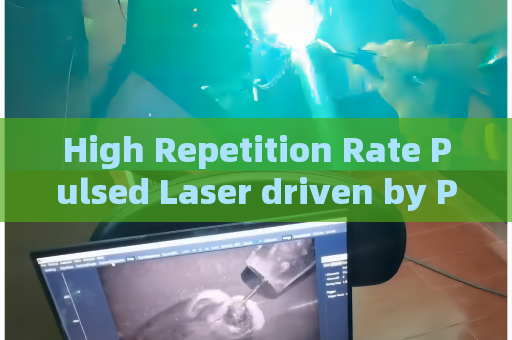
High Repetition Rate Pulsed Laser driven by Penetrating Imager supports long-distance imaging in dim border environments Along a remote border crossing, the hours before dawn are the hardest for security personnel. The road stretches into darkness, and vehicles arrive with headlights blazing, which creates blinding reflections on windshields and side windows. An observer positioned at a distance cannot tell whether the driver is alone, whether passengers are concealed in the back seat, or whether an object behind the glass is a weapon or a bag. Conventional low-light cameras struggle with the same conditions: they amplify ambient light, but that also amplifies glare, fog, and atmospheric scatter. The High Repetition Rate Pulsed Laser driven by Penetrating Imager supports long-distance imaging in dim border environments by solving this exact problem. Yet the core pain point is not merely darkness—it is the inability to obtain a clear, magnified view through vehicle glass from a safe standoff range, under changing weather and unpredictable lighting. The Penetrating Imager is an active optical system built around laser range-gated imaging technology. It combines a high repetition rate pulsed laser with an intensified gated camera that contains a microchannel plate, a high-voltage module, and a timing unit. The laser fires short, powerful pulses toward the target, while the camera’s gate opens only for the precise interval when reflected light returns from the chosen distance. This method rejects backscattered photons from fog, rain, dust, or haze, because those photons arrive before or after the gate window. For border observation, the most valuable capability is the system’s ability to see through automotive glass and tinted windows. A through-window tactical recce becomes possible even when the vehicle is moving or the observer is hundreds of meters away. The high repetition rate of the laser ensures that the camera receives a continuous sequence of pulses, producing smooth video without motion blur or temporal gaps. In practice, an operator at a border checkpoint can aim the Penetrating Imager at an approaching vehicle from behind a protective barrier. The range gate is adjusted to match the distance to the car, and the imaging head captures the scene through the driver’s window or the rear windshield. Because the laser illuminates the target actively, the system does not depend on moonlight or streetlights. A dim border environment that would defeat ordinary binoculars becomes fully legible on the display. The operator can observe the driver’s hands, the number of occupants, and any sudden movements that might indicate a threat. This long-distance capability keeps personnel away from a potentially hostile vehicle until a proper inspection plan is in place. The system also handles strong headlight glare, since the gating window filters out light that is not synchronized with the laser pulses. In a situation where a driver’s face is hidden in shadow, the reflected laser light reveals the details that passive imaging cannot. The same technology adapts to degraded weather conditions that frequently appear along border routes. A light rain or a low-hanging mist scatters ordinary illumination, but the Penetrating Imager’s time-gated receiver distinguishes the laser echoes from the scattered background. The operator simply restores image clarity by narrowing the gate or increasing the pulse repetition rate. This is an entirely optical method, using laser light to see through translucent media such as glass and atmospheric particles. It never requires contact with the target and carries no dependence on passive ambient light. For security teams tasked with covert observation, the Penetrating Imager provides a decisive advantage: it turns an invisible vehicle interior into a well-lit scene, without ever exposing the operator. The High Repetition Rate Pulsed Laser driven by Penetrating Imager supports long-distance imaging in dim border environments, making it an essential tool for modern border surveillance.




