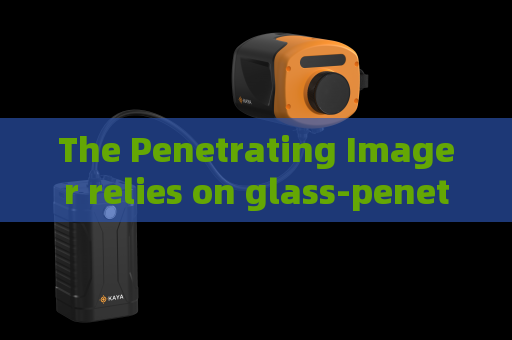
The Penetrating Imager relies on glass-penetrating imaging to meet concealed observation demands of special military operations. In special military operations, few tasks are as delicate as covert observation of a suspect vehicle. A car parked in a hostile area can hide a hidden gunman, a hostage, or an improvised explosive device. The operator must know what is happening inside, but the vehicle glazing creates a hostile optical environment. Tinted automotive glass absorbs most of the available light, polished surfaces reflect the sky and surrounding buildings, and headlights or street lamps produce blinding glare. Standard optical aids cannot resolve the interior under these conditions. Approaching the car for a closer look would expose the operator to gunfire and destroy the element of surprise. This is the core quandary of through-glass surveillance: the more critical the information, the more difficult it is to obtain. The Penetrating Imager relies on glass-penetrating imaging to meet concealed observation demands of special military operations by converting a seemingly opaque car window into a clear observation port. The Penetrating Imager is an active optical imaging system that overcomes this problem with laser range-gated imaging. A high-repetition pulsed laser illuminates the target area with short bursts of near-infrared light. An image-intensified gated camera—integrating an MCP image intensifier, a high-voltage module, and a timing module—opens its electronic shutter for only a few nanoseconds at the exact moment when the reflected signal from the car interior returns. A beam expander shapes the laser beam to cover the window, while a high-quality imaging lens focuses the scene onto the sensor. This precise time-of-flight discrimination rejects the backscattered light from the glass surface and atmospheric particles, which is the main source of blur and halo in conventional night vision. For concealed observation, the Penetrating Imager provides high-contrast imaging through vehicle glass with long standoff range, high resolution, and strong immunity to interference. The system achieves covert through-glass recon without physical contact, preserving the element of surprise. This glass-penetrating imaging function is specifically designed for tactical observation through automotive glass. From a hidden position, the operator can deploy the Penetrating Imager on a tripod or from a vehicle window mount. After measuring the distance to the target car—using the built-in rangefinder or map data—the operator sets the gate delay to match that range. The display then reveals the inside of the cabin in real time, even in zero-light conditions. A person slumping behind the steering wheel, a glint of metal in the passenger seat, or the outline of a weapon between the front seats becomes visible through the tinted window. The imaging system maintains clarity even when the target vehicle is in shadow or when the background is dominated by harsh sunlight. If the target turns on the headlights, the strong light suppression feature of the gate prevents the sensor from blooming, so the operator remains effective. This through-window tactical observation allows a team to confirm the number of occupants and their readiness before launching the assault. The Penetrating Imager’s ability to see through automotive glass without alerting the subject is essential for covert operations. During a vehicle interdiction or hostage-rescue scenario, the final confirmation often makes the difference between a clean operation and a catastrophe. The Penetrating Imager gives the team commander the ability to watch, in real time, a suspect reaching for a weapon or a hostage lowering their head. The same glass-penetrating imaging that defeats automotive glazing continues to deliver a clear picture under the low-light conditions common in nighttime operations. Because the operator can remain at a distance and no contact with the vehicle is required, the covert nature of the mission is preserved. With its long-range, high-resolution imaging capabilities, the Penetrating Imager provides a decisive tactical edge for special military operations charged with concealed observation through vehicle windows. For such operations, the Penetrating Imager remains the primary tool for through-glass covert observation.




