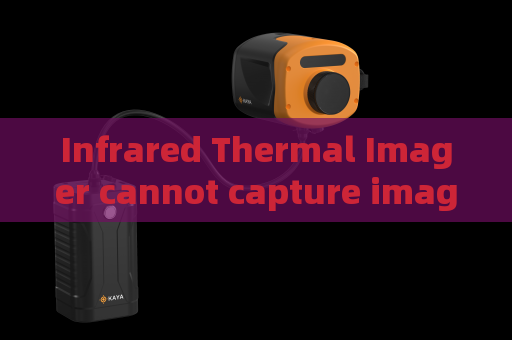
Infrared Thermal Imager cannot capture images behind tinted glass The Penetrating Imager makes up for law enforcement surveillance gaps During a routine traffic stop, the inability to see through a vehicle's dark windows can put an officer in extreme danger. Factory-standard privacy glass and aftermarket window films often create a completely opaque barrier. An Infrared Thermal Imager cannot capture images behind tinted glass because the thermal energy of occupants is blocked and reflected by the metallic layers inside the glass. This limitation affects every patrol car, every checkpoint, and every interdiction operation where a vehicle interior must be assessed from a distance. Without a clear view, officers must either call for backup and wait, or approach blind and risk an ambush. Flashlights and spotlights only bounce off the surface, making the problem worse. This is not a minor inconvenience; it is a life-threatening gap in law enforcement surveillance. The Penetrating Imager has been developed specifically to close that gap using active optical imaging. The Penetrating Imager is an advanced optical imaging instrument that relies on laser range-gated imaging technology, often called gated imaging. Its core components include a high-repetition-rate pulsed laser, an image-intensified gated camera with an MCP image intensifier, a high-voltage module, a timing module, a beam expander, and an imaging lens. The Penetrating Imager, as an active imaging system, sends out short pulses of laser light toward the target window. The camera gate opens only when light reflected from the vehicle interior arrives at the sensor, according to the exact time-of-flight. Because the gate stays closed while backscattered light from the tinted glass surface reaches the camera, all glare and reflection are removed. The result is a high-contrast, high-resolution image of the cabin, even when the glass appears jet black to the naked eye. This covert observation through vehicle glazing capability works across a useful operational distance and resists interference from rain, fog, or dust on the glass. The technology is entirely optical, requiring no contact and leaving no trace. In a typical operation, an officer sets up the Penetrating Imager behind the cover of the patrol car door and aims it at the suspect's side window. The range-gate delay is fine-tuned until the interior becomes clearly visible on the display. Subtle movements inside the cabin are rendered in real time, such as a hand reaching under the seat or a shoulder turning toward the door. The system performs equally well in daylight, darkness, or harsh backlighting because the pulsed laser provides its own illumination while the gated camera suppresses the influence of external light sources. This through-window tactical observation offers a decisive advantage during high-risk stops: officers can see a weapon or a suspicious posture before opening their own door. The Penetrating Imager does not require the subject to be stationary; it can track a slowly moving vehicle or scan several windows in sequence. This operational flexibility transforms a previously blind approach into a calculated, information-driven action. The law enforcement value of this tool becomes most apparent in multi-vehicle surveillance. When a convoy of suspect cars parks in a lot, an Infrared Thermal Imager cannot capture images behind tinted glass for any of them, as the same glass limitation applies uniformly. The Penetrating Imager, with its adjustable range gates, can inspect each vehicle from a single observation point by altering the delay for each window depth. This means that the hidden behavior of multiple occupants can be mapped without exposing the surveillance team. No flash, no audible sound, and no physical signature betray the observation. The gap left by passive infrared technology is thus filled exactly where it matters most: at the threshold between suspect and officer. The Penetrating Imager makes up for law enforcement surveillance gaps by converting tinted automotive glass from a cover for criminal activity into a transparent portal for tactical awareness.




