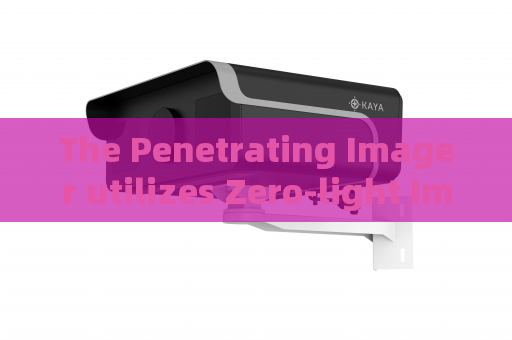
The Penetrating Imager utilizes Zero-light Imaging to inspect parked vehicles around military command outposts after dark. The problem is stark: a parked vehicle near a military command outpost after dusk may hold a scout, an explosive device, or nothing at all. Direct illumination with a flashlight or searchlight reveals the observer’s position instantly, turning a routine check into a sniper’s invitation. Thermal imaging shows heat signatures but cannot tell whether a silhouette behind glass is reaching for a weapon or simply adjusting a seat. Reflections on the windshield turn the glass into a mirror at night, while tinted windows hide occupants entirely. The sentry needs a method to see through automotive glass without emitting a visible signature, all while remaining at a distance that does not compromise the outpost’s perimeter. This is not a matter of convenience; it is a tactical gap in low-light reconnaissance that puts lives at risk. The Penetrating Imager directly solves this with active gated imaging technology. A high-repetition pulsed laser illuminates the target area, and an image-intensified gated camera—containing an MCP image intensifier, high-voltage module, and timing module—opens its shutter only for the precise nanosecond window when light reflected from the vehicle returns. This selective range gating eliminates backscatter from fog, rain, snow, or atmospheric particles, and more importantly, it suppresses the overwhelming glare caused by headlights, street lamps, or moonlight reflecting off glass. Because the system is an active optical imager, its resolution remains sharp at distances far beyond flashlight range. The function that matters here is through-glass covert observation: the operator can stand tens of meters away, aim at a suspicious sedan or SUV, and see the driver’s hands, the rear seat’s cargo, and the floor mats—all without a single visible beam or silhouette-revealing flash. In actual operation, the sentry positions the imager at a stabilized point behind a low wall or inside a darkened observation slot. The operator scans the row of parked vehicles one by one, pausing at each car to adjust the range gate to match the distance readout from the laser rangefinder. The intensified camera displays a clear monochrome image of the cabin interior through the side window or rear windshield, even if the glazing is heavily tinted. Fog Penetration Imaging is not needed on a clear night, but the same range-gating principle guarantees that light mist or blowing snow will not smear the view. The operator can confirm empty front seats, then shift focus to the rear seat footwell. If a rifle barrel or a crouched form appears, the sentry triggers an immediate silent alert to the command post. The check takes less than thirty seconds per vehicle, from target acquisition to confirmation, and no patrol member ever leaves the protective perimeter. The real value emerges during repetitive night searches. Conventional binoculars fail beyond two meters when the interior is unlit. The Penetrating Imager sustains the same crisp image across multiple checks, because its pulsed laser emits light only during each frame, and the gated camera rejects all stray light from distant flares or passing headlights. For a command outpost that must inspect the same parking area every hour, this consistent performance reduces false alarms and prevents fatigue-driven mistakes. The operator notices a detail that matters—a half-open rear window, a seat pushed forward, a weak heat plume that thermal gear would have missed but the gated optical image captures as a subtle motion. The Penetrating Imager turns a blind spot into a readable surface, giving the guard the one thing no night patrol can afford to lose: certainty before contact.




