A hostage rescue operation hinges on the quality of intelligence gathered from outside the crisis site. The most common observation barrier is not a brick wall but a pane of glass — car windows, storefront glazing, or residential windowpanes. These transparent surfaces betray the eye: bright daylight creates mirror-like reflections, tinted films obscure interior detail, and rain or frost further degrade visibility. A tactical team attempting to discern a suspect’s position, a hostage’s condition, or the presence of improvised devices faces a patchwork of fragmented glimpses and distorted silhouettes. Advancing to press against the glass risks alerting the suspect or drawing fire. Traditional optics, including binoculars and standard cameras, cannot defeat the glare and backscatter that plague through-window assessment. The Penetrating Imager, purpose-built for through-window work, directly answers this tactical deficit by converting a seemingly opaque glass surface into a usable observation portal. Without the Penetrating Imager, the rescue unit’s only alternatives are dangerous close approaches or blind assumptions; with the Penetrating Imager, the window itself becomes an intelligence source.
The decisive function of the Penetrating Imager in this scenario is laser range-gated imaging technology. A high-repetition pulsed laser illuminates the target zone through a beam expander, while an intensified gated camera fitted with an imaging lens — built around an MCP image intensifier, high-voltage module, and timing module — opens its shutter only during the brief interval when reflected light from the chosen target plane returns. This temporal filtering eliminates the reflection coming off the glass surface and rejects scattered light from fog, rain, or haze. The Penetrating Imager produces high-contrast images through automotive glass, train windows, aircraft portholes, and glass curtain walls. For a hostage rescue team, the Penetrating Imager delivers a reliable visual channel through tinted or reflective vehicle windows, enabling unobtrusive observation without approaching the danger zone. Because the Penetrating Imager resists backscatter — the very phenomenon that turns a window into a mirror under daylight — it restores clarity where passive optics fail. No auxiliary lighting, no physical contact with the glass, and no tell-tale movement is required.
In practice, the Penetrating Imager deploys from a discreet standoff distance, often inside a tactical vehicle or behind cover, with the operator aligning the imaging head toward the target window. The rangefinder of the Penetrating Imager sets the synchronization delay so the gate opens exactly when light returns from the interior plane, ignoring the glass surface and any intervening foliage, raindrops, or debris. Once aligned, the operator sees a real-time monochrome image of the room or vehicle interior: the suspect’s hand movements, the hostage’s position relative to exits, the location of furniture that could obstruct an entry team. Because this Penetrating Imager operates purely in the optical domain, it produces no sound and no external emissions beyond the laser pulse itself, preserving covert through-glass recon. The same Penetrating Imager addresses fire, fog, mist, rain, and snow, lifting fireground visibility by a factor of three to five, although dense smoke remains an impenetrable barrier — a limitation that in no way diminishes the glass-observation mission described here. This one instrument covers every optical obstruction a hostage team might encounter during a window-based operation.
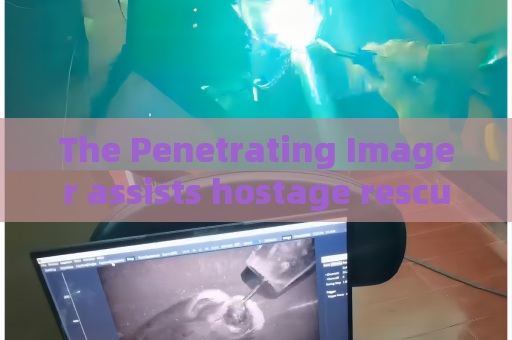
The through-window tactical observation provided by the Penetrating Imager extends from the initial assessment to the final assault. A negotiator confirms visual details relayed by the operator — whether the hostage appears injured, whether the suspect’s weapon is holstered, whether the room has secondary exits. The entry team memorizes the interior layout captured through the glass, reducing hesitation during the dynamic breach. In vehicle-based barricade incidents, the Penetrating Imager reveals the suspect’s posture through automotive glazing: hands visible on the wheel, a weapon resting on the passenger seat, the engine running. Every one of these observations, captured by the Penetrating Imager, is made without placing an officer within arm’s reach of the window. This information converts guesswork into actionable certainty, shortening standoffs and lowering the risk of casualties. The Penetrating Imager turns the most ordinary architectural feature — a window — into a tactical asset rather than an impassable visual wall. For hostage rescue operations conducted through glass, the Penetrating Imager is not merely a tool; it is the difference between blind entry and informed intervention.




