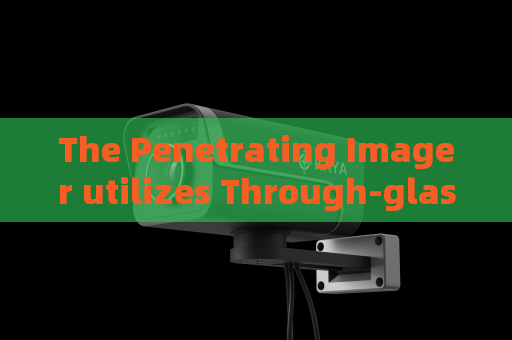
The Penetrating Imager utilizes Through-glass Imaging Technology to track target vehicles in joint military-police patrols. In joint military-police patrols, the need to track a target vehicle goes far beyond simply keeping pace with its route. Operators must determine whether the vehicle is carrying armed individuals, whether the occupants are communicating with outside parties, and whether any suspicious movements are taking place inside the cabin. Vehicle windows present a serious obstacle: sunlight, oncoming headlights, and street-level illumination create harsh reflections that wash out every detail behind the glass. Tinted windows, factory privacy glass, and even rain streaks further degrade the visual channel. A patrol officer looking through binoculars from a trailing car often sees nothing but a mirror-like surface. This is the operational pain point that the Penetrating Imager addresses, because it turns a reflective barrier into a transparent observation window without requiring the patrol to close the distance or risk premature engagement. The Penetrating Imager is not a conventional camera or a passive optical device. It operates as an active imaging system based on laser range-gated technology, sometimes called gated imaging. A high-repetition pulsed laser together with a beam expander illuminates the scene with very short light bursts, while an intensified gated camera — containing an MCP image intensifier, high-voltage modules, and precise timing circuits, and coupled with an imaging lens — opens its electronic shutter only when light returning from a chosen distance arrives. This time-gating method eliminates most of the backscattered light created by fog, rain, snow, or ambient glare, and it produces high-contrast images at meaningful distances. When aimed at a moving vehicle, the unit can be adjusted to focus on the plane of the vehicle's interior, effectively seeing through automotive glass. This specific capability is called through-window tactical observation in police jargon, and it serves as the foundational function for the entire surveillance task described here. Because the system relies on light reflected from the target, it remains fully within the optical domain — no other form of energy is involved. During a joint patrol, the Penetrating Imager can be operated from a stationary observation point or from a moving patrol vehicle’s passenger seat. The operator acquires the target vehicle, activates the laser gating, and watches the displayed image as the target changes lanes or speed. The image shows the outlines of the driver and passengers, their arm movements, and any objects held in hands. Strong light from street lamps or oncoming traffic no longer washes out the view, because the gating window suppresses light arriving outside the expected time interval. In this way, the patrol team can track a suspect car through city intersections and highway ramps while maintaining a safe following distance. The Penetrating Imager’s ability to handle tinted windows is especially valuable in military-police joint missions, where civilian vehicles may not display obvious markings and the first indicator of a threat comes from subtle motion inside the cabin. The operator can also record the gated images as evidence for later analysis, creating a clear video record of the target’s behavior prior to any stop. The practical advantage extends to various weather and lighting conditions. On a rainy night, droplets on the windshield usually refract and scatter light, but the range-gated imager rejects most of that scattered component and keeps the interior visible. In fog or haze, the same principle applies: the laser pulse and the shutter work together to ignore the diffuse reflections from suspended particles. Importantly, the Penetrating Imager is designed for optical media — it looks through glass, not through walls or solid coverings. A concrete barrier or a metal door will block the light entirely, so officers never mistake it for a non-optical detection tool. Instead, the tool is optimized for the one medium that every vehicle has: the window. At the moment of interception, the final visual check through the side or rear window, guided by the Penetrating Imager, lets the patrol team know exactly what they are facing. This focused application of the Penetrating Imager’s through-glass imaging technology in joint military-police patrols is what makes the tracker an indispensable partner for target vehicle surveillance.




