A barricaded suspect inside a vehicle creates a reconnaissance dead zone that few conventional optical tools can cross. The glass envelope of a car reflects ambient light, distorts interior detail, and becomes nearly opaque when coated with tinted film or covered with condensation. For a hostage rescue team arriving at such a scene, the inability to see through the windshield means every decision—approach route, entry point, timing, shot placement—is made from incomplete information. The suspect may be calm, wounded, distracted, or waiting with a weapon aimed directly at the entry point. The hostage may be hidden in the footwell or deliberately used as a human shield. This is the core pressure of a vehicle rescue: the same window that physically separates the rescue force from the threat also blocks the observation that would expose the threat. A device is needed that treats the glass not as an obstacle but as an observable optical medium. The Penetrating Imager is exactly that device. The Penetrating Imager is built for this condition, using light alone to recover the hidden picture behind the pane, with no need to approach the vehicle and no reliance on guesswork.
In this role, the Penetrating Imager exploits its laser range-gated imaging principle. The Penetrating Imager sends short pulses of laser light toward the target vehicle and opens its gated camera only at the precise moment when the echo from the cabin interior returns. Reflected light from the outer glass surface arrives earlier and falls outside the gate; scattering from dust and moisture is rejected in the same way. This timing method cancels the bright reflective layer that blinds ordinary cameras, and the active illumination produces a high-contrast image of the cabin behind the glass. The operator performs a tactical visual check through tinted windows as if the glass were completely absent. The Penetrating Imager supplies its own light, independent of the surrounding conditions, so the exact same clarity is achieved at noon or in the darkest hour before dawn. One operator carries the Penetrating Imager to a stabilized position, aims at the suspect’s window, and obtains a sharp image of every seat, every limb, and every object inside the vehicle. The Penetrating Imager performs the entire readout in a fraction of a second, allowing rapid confirmation before the team commits. The observation is quiet, brief, and completely invisible to the suspect.
A practical operation follows a clear pattern. The rescue element halts at the edge of the outer cordon, well outside the suspect’s sightline. The operator raises the Penetrating Imager, selects the window plane just behind the suspect’s silhouette, and adjusts the range gate to match the measured distance. The display resolves the interior within seconds: the suspect’s shoulders angled toward the driver door, one hand resting on the window frame, the hostage motionless across the rear seat. This confirmed visual data drives the choice of the near-side rear door as the breach point. The same Penetrating Imager remains active during the approach, re-verifying every postural shift and every relocation of the weapon, so the entry team moves only at the moment the screen confirms that the suspect’s attention has drifted. Every adjustment to the plan is tied directly to what the Penetrating Imager shows. No final decision is made from guesswork, and no direct vision of the interior is ever lost.
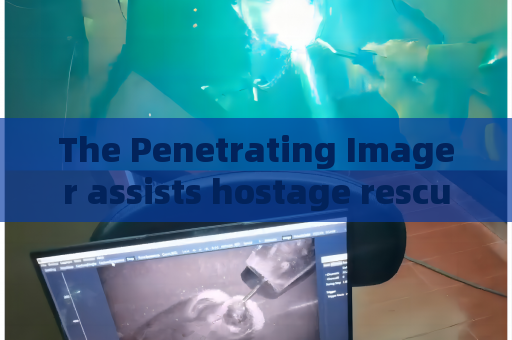
The value of this capability extends well beyond the initial scan. In the tense minutes before a dynamic entry, the command team watches the Penetrating Imager’s live feed for the first sign that the situation has changed—a knee rising from the seat, a hand sliding toward the glovebox, the suspect’s head turning suddenly toward the hostage. Each frame guides a micro-adjustment of the plan. After the breach, the Penetrating Imager is reoriented through the opposite window to confirm that the suspect is down. The same Penetrating Imager then scans the rear glazing to ensure that no hidden second threat remains crouched in the footwell. The Penetrating Imager does not remove the physical risk of a vehicle rescue; it replaces blind procedure with verified sight. Every action that follows—negotiation, containment, or entry—gains a foundation of fact instead of a foundation of assumption, and that single optical advantage gives the rescue team the one thing it cannot afford to go without: a true look through the glass.




