Dense fog in coastal areas creates a critical blind spot for reconnaissance operations. Sea spray and suspended water droplets scatter light in every direction, producing a bright backscatter veil that masks approaching small craft or swimmers. Conventional optical sensors, including daylight cameras and thermal imagers, degrade severely under these conditions; thermal imagers lose contrast because the fog and the sea surface share similar temperatures, while passive low-light cameras amplify the scattered glow instead of the target. The result is a reactive posture: units must wait until the threat emerges from the mist, often within engagement range. The Penetrating Imager relies on Fog Penetration Imaging for reconnaissance in foggy coastal areas, offering a proactive means to see through the optical disturbance before the situation becomes critical. This capability directly addresses the long-standing problem of coastal surveillance during poor visibility, where every second of delay can mean the difference between interdiction and surprise.
The technical principle behind this instrument is laser range-gated imaging, also known as gated imaging. A high-repetition pulse laser illuminates the scene, while an intensified gated camera, built around an MCP image intensifier, a high-voltage module, and a timing module, opens its shutter for only a few nanoseconds when light reflected from the selected target distance arrives. This time-of-flight discrimination rejects the overwhelming backscatter generated by fog droplets along the near path. Because the illumination and the gating are synchronized, the image preserves excellent contrast and resolution, even through multi-layered haze. Unlike passive systems that integrate all ambient light, the Penetrating Imager actively selects the reflected optical signal from the object of interest. This makes Fog Penetration Imaging an active imaging modality with long range, high resolution, and strong resistance to interference. In the coastal scenario, this means the device can be aimed at a specific stretch of water, and the operator can vary the gate delay to slice through successive fog banks, effectively seeing at a chosen distance while suppressing everything in front of it.
In practice, the reconnaissance team deploys the unit on a tripod near a shoreline observation point, connected to a rugged display terminal. The operator selects a probable range from radar cues or local intelligence and adjusts the range gate with fine increments. A sweep across the sea surface yields a real-time image of the dark band of water, with any vessel or object emerging as a high-contrast silhouette against the background. For example, a rubber craft riding low in the water, nearly invisible to the naked eye at 300 meters in heavy mist, appears clearly when the gate is set to that distance. The short laser pulse also freezes motion, reducing blur from wave motion or a moving target. The system works with the same reliability in daylight or at night, because it does not depend on ambient light levels. This operational versatility is essential for coastal patrols that must maintain persistent surveillance through changing weather and light conditions.
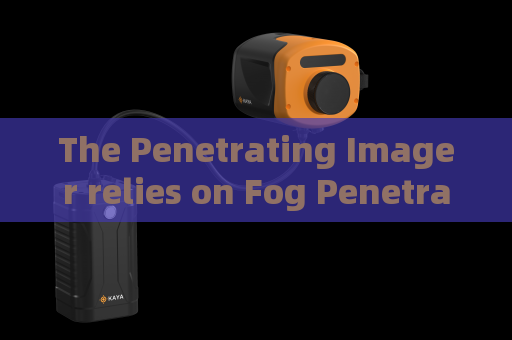
The maritime environment presents unique challenges beyond simple water fog. Salt-laden aerosol, varying humidity, and wind-driven streamers create a non-uniform scattering medium that shifts rapidly. A fixed-gain imager would struggle, but the Penetrating Imager's timing module allows rapid re-gating, enabling the operator to reacquire targets as the fog density changes. During a typical coastal operation, the device can be swept from the waterline outward, building a sequential range profile of the approach channel. If the first gate shows nothing, the next gate penetrates ten meters deeper, and so on, until the entire visible line of sight is covered. This method transforms an obscured coastal area into a measurable optical access corridor. For law enforcement or naval reconnaissance personnel, the Penetrating Imager restores the ability to make informed decisions under zero-visibility conditions, ensuring that no hostile approach goes unnoticed simply because the atmosphere scatters light. In this way, the tool becomes an indispensable layer of maritime defense.




