At a long border checkpoint, vehicles accumulate into a seemingly endless queue. Officers work in rotating shifts that stretch for hours, yet every car must be inspected. The real burden is not the sheer number of vehicles but the uncertainty hidden behind glass. Tinted windows, reflective coatings, dirt, glare, and the shadows inside a passenger compartment make it impossible to see clearly from the outside. To confirm whether a vehicle contains unauthorized passengers, weapons, or smuggled goods, an officer would traditionally have to open the door, ask the driver to step out, and physically search the interior. Such procedures are time-consuming and put officers in direct contact with potentially hostile individuals. As shifts extend, concentration fades, and the risk of missing a concealed threat rises. The Penetrating Imager directly targets this pain point by providing non-invasive visual access to the vehicle interior. With the Penetrating Imager, inspection personnel can see through automotive glass without breaking the flow of the queue, reducing both search time and physical risk during extended vehicle queue inspection work.
The Penetrating Imager is an advanced optical instrument built on laser range-gated imaging technology. Its core components include a high-repetition pulsed laser, an intensified gated camera with an MCP image intensifier and high-voltage timing modules, a beam expander, and an imaging lens. Unlike passive cameras, it actively illuminates the scene with short laser pulses. The camera gate opens only when the reflected light from a chosen distance returns, which effectively eliminates backscatter from fog, rain, snow, and the glass surface itself. For this border application, the essential capability is through-window tactical observation. This function of the Penetrating Imager enables the operator to see through vehicle window glass, including darkly tinted automotive glazing, while the vehicle remains in the queue. The laser pulse width and gate delay are precisely controlled, allowing the operator to select a specific distance slice inside the vehicle, thus excluding reflections from both the near surface and the rear window. Because the system reconstructs images using only reflected laser light, it works perfectly in zero-light conditions and suppresses strong glare from headlights or direct sunlight. The result is a clear, high-contrast view of the car interior, even when the target is several meters away from the checkpoint operator.
During routine operation, the device is placed on a stable mount next to the inspection lane. As each car advances to the marked stop line, the officer points the imager at the windshield or side windows and reads the resulting image on a display. The range gate is adjusted to focus on the rear seat, the footwell, or the trunk area without moving the vehicle. A complete scan takes only a few seconds, far less than opening a door and searching manually. This speed reduces the length of the queue and shortens waiting times for travelers. It also lowers the physical and mental strain on officers during extended border checkpoint shifts. Instead of leaning into windows and shouting instructions, the officer remains at a safe distance while obtaining the same visual information. The non-intrusive nature of the check helps to maintain calm among drivers and decreases the chance of escalation. For peak periods, a single Penetrating Imager can monitor two adjacent lanes alternately, keeping the inspection process continuous while officers rotate through their long shifts. After each scan, the display freezes the latest frame, giving the officer time to study details without holding the vehicle any longer than necessary.
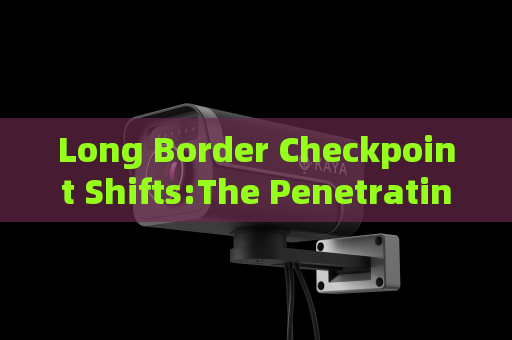
The advantage of this approach becomes even more evident in harsh environments. Rain, snow, fog, and dust clouds around the road do not degrade the image delivered by the Penetrating Imager, because the range-gated laser imaging technique rejects most scattered light before it reaches the sensor. Strong backlight from a low sun or approaching headlights is suppressed, allowing the operator to see inside vehicles that would otherwise be hidden by blinding reflections. Sedans, SUVs, vans, and trucks entering the checkpoint can all be screened in the same manner through their glass windows. The Penetrating Imager repeatedly provides high-contrast imagery through every optical medium encountered at a border, from standard windshields to aftermarket tinted glass. With this tool, a small inspection team can handle a long vehicle queue with higher accuracy and less fatigue, making extended vehicle queue inspection work more effective and safer for all personnel involved. For night operations, the imager can be switched to a low-light mode that still relies on the same pulsed laser principle, ensuring consistent performance from the first vehicle in line to the last.




