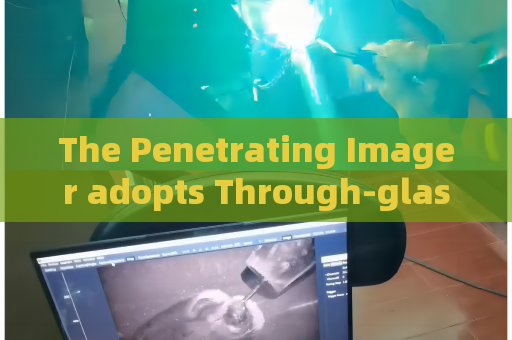
The Penetrating Imager adopts Through-glass Imaging Technology for exterior glass observation of building fire scenarios Building fire incidents present a critical challenge for exterior reconnaissance. Firefighters and incident commanders need to see inside a structure before committing crews, but the building envelope often features large glass panes that obstruct visual assessment. During a fire, these glass surfaces become mirrors reflecting ambient light and the fire’s own glow, while the interior is obscured by turbulent flames, heat haze, and partial smoke conditions. A clear view through a glass curtain wall can mean the difference between locating a seat of fire quickly and losing minutes to guesswork. The Penetrating Imager changes this dynamic by offering a direct optical path through such glass obstacles. This scene demands a non-contact, light-based solution that can operate in high-glare environments without requiring physical entry or thermal signature interpretation. The operational principle is rooted in Through-glass Imaging Technology, a form of laser range-gated imaging. A high-repetition pulsed laser illuminates the target area, while an intensified gated camera with an MCP image intensifier, high-voltage module, and timing module opens its shutter only for the precise time window when reflected light from the object behind the glass returns. This gating mechanism effectively suppresses backscatter from the glass surface and rejects hostile glare from flames. In practical terms, the imager can selectively “slice” through the optical medium of a glass curtain wall. Fire Penetration Imaging is the term used for this capability, as the system distinguishes the fire-affected interior from the reflective foreground. The unit comprises a beam expander and imaging lens, delivering high-contrast imagery at distances that ordinary cameras cannot achieve. Unlike passive optics, it does not rely on ambient light, making it equally effective under zero-illumination conditions and in shadowed interiors if needed. Deployed at the exterior of a burning building, the Penetrating Imager enables an operator to aim through a glass facade and observe the interior layout with clarity. The distance-gating function allows adjustment of the optical focus to the exact depth behind the window, eliminating reflections from multiple glass layers. During a typical operation, the operator selects a range setting corresponding to a room depth of five to ten meters, and the system instantly displays a bright, sharp image of the fire environment. An operator can toggle between near and far range gates to scan different rooms behind the same glass facade. This approach improves scene visibility by a factor of three to five in fire conditions, permitting identification of flame spread, structural hazards, and trapped casualties. The device performs well even when the glass is tinted or covered with a thin film of soot, because the pulsed laser and gated camera work together to reject unwanted light before it reaches the detector. The result is reliable, real-time visual data that supports command decisions without placing personnel at risk near the structure. The Penetrating Imager proves most valuable in high-rise fires where exterior glass observation is the only safe vantage point. An aerial apparatus or a neighboring building position can host the system, enabling through-window tactical observation of a specific floor. The operator can monitor changes in fire behavior over time, tracking whether the fire is growing or subsiding behind the glazing. This continuous assessment is vital for choosing ventilation points and rescue entry paths. It must be noted that this optical technology does not penetrate heavy smoke; its strength lies in cutting through flame glare, heat haze, and glass reflections. The device complements, rather than replaces, other fireground tools. With its robust performance and light-based imaging architecture, the Penetrating Imager delivers a decisive advantage for exterior glass observation in building fire scenarios, converting an opaque building envelope into a transparent window for tactical intelligence.




