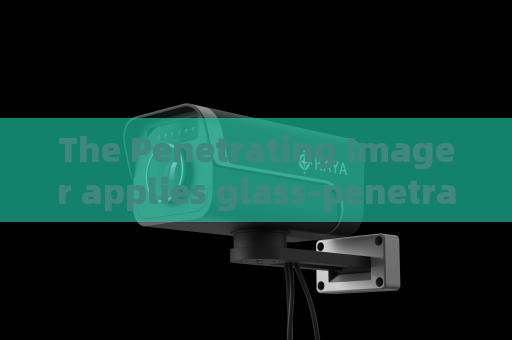
The Penetrating Imager applies glass-penetrating imaging to reduce close-range contact risks in armed police vehicle interception. In armed police vehicle interception, the moment of close approach is the most vulnerable. Stopped vehicles are unknown environments: occupants may be armed, intoxicated, or ready to flee. The officer who walks up to the driver-side window must rely on shouted commands and a flashlight beam, while the interior remains hidden behind glass reflections and tinted film. A weapon can be held below the sightline, a passenger can crouch in the back seat, or a hand can move toward a compartment. These close-range contact risks have led to ambushes in many law enforcement encounters. The Penetrating Imager changes this equation. Based on glass-penetrating imaging, it offers a way to inspect the vehicle's interior from a distance, allowing the tactical picture to be formed before any officer has to stand beside the window. In this way, the operation moves from a vulnerable physical contact to an information-driven standoff. The Penetrating Imager is an active optical instrument that uses laser range-gated imaging technology, or gated imaging. This technique is the basis of glass-penetrating imaging. Its key modules include a high-repetition-pulse laser, an image-intensified gated camera with an MCP image intensifier, high-voltage and timing modules, a beam expander, and an imaging lens. In a vehicle interception, the operator illuminates the target with brief laser pulses; the gated camera opens its shutter only during the time window when light is returning from the chosen depth inside the car. Light reflected by the windshield surface or scattered by rain, fog, or haze returns earlier or later and is discarded. This yields high-contrast images of the occupant area through glass, with long standoff range, high resolution, and good immunity to interference. The result is a practical through-window tactical observation tool for patrol use, giving real-time video of interior movement without the need to press against the glass. During the stop, the Penetrating Imager can be operated from a patrol vehicle or a tripod at a distance of several meters. The operator selects the windshield, a front side window, or a rear quarter window and adjusts the range gate to the plane of the front seats or the rear bench. The image displays whether the driver's hands are visible, whether a passenger is moving toward a door handle, or whether a rear-seat occupant is hiding below the beltline. This information is acquired before any verbal command is given. If the display shows a weapon or a hostile posture, the interception team can stand off and call for backup, or order the occupants out one by one. If the display is clear, the approach can be done with confidence. The close-range risk drops because the decision is based on observed evidence, not on assumption or surprise. This standoff advantage changes the tempo of the entire event. The value of the system continues after dark. Standard headlights and street lamps produce strong glare from glass surfaces, but the Penetrating Imager's active illumination and nanosecond gating suppress that glare. Officers can perform through-glass covert observation without switching on a flashlight or announcing their position. They can confirm whether the vehicle is occupied, whether a child is in the rear seat, or whether a passenger is slipping a weapon under the seat. Every detail gained through glass-penetrating imaging reduces the need to expose an officer at close range. For armed police vehicle interception, the Penetrating Imager transforms a blind traffic stop into a deliberate surveillance action, where the first move belongs to the side with better vision. The image remains legible even when the suspect vehicle is parked under a bridge or in an unlit alley. This zero-light performance is essential for night interdiction.




