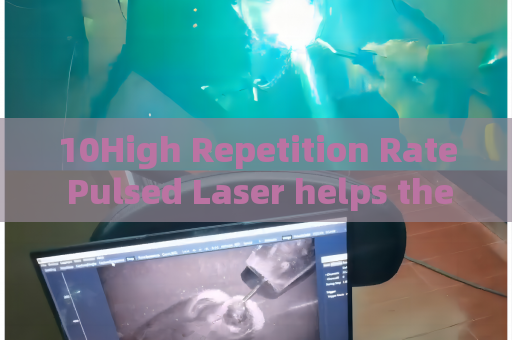
10High Repetition Rate Pulsed Laser helps the Penetrating Imager achieve steady imaging in reflective roadside inspection scenarios Roadside inspection scenarios confront law enforcement with one of the most unstable visual environments in field operations. A stationary vehicle during a traffic stop presents multiple reflective planes: the windshield catches overhead sunlight, the side windows mirror ambient scenery, and the rear window turns the interior into a darkened cavity framed by glare. These reflections generate intense backscatter that overwhelms conventional optics, transforming the passenger compartment into an area that cannot be assessed from a safe distance. The officer must choose between approaching blind or maintaining distance with incomplete information. The Penetrating Imager offers a path forward, yet until recently, the very reflectivity of automotive glazing defeated attempts at steady imaging. The core problem is not light sensitivity or resolution but temporal confusion: reflected glare and the target signal arrive at the sensor at the same moment, and ordinary cameras integrate them into a single washed-out frame. The breakthrough arrives with coherent gated illumination. The 10High Repetition Rate Pulsed Laser helps the Penetrating Imager achieve steady imaging in reflective roadside inspection scenarios by synchronizing each laser pulse with an extremely narrow camera shutter window. The Penetrating Imager combines a high-repetition-rate pulsed laser, an image intensifier gated camera with an internal MCP image intensifier, a high-voltage module, a timing module, a beam expander, and an imaging lens. During operation, the laser emits a short pulse toward the target vehicle; the gated camera opens its sensor only for the precise nanosecond-scale interval when light returning from the vehicle interior reaches the aperture. Reflected glare from the glass surface, possessing a different time of flight, falls outside this window and is discarded. The high repetition rate ensures that this gating process repeats at a frequency high enough to produce a continuous, flicker-free video stream. This operational mode, known in field manuals as tactical visual check through tinted windows, gives the inspecting officer a stable view of the cabin even when the windshield is coated with reflective film or angled to cast direct glare. Field deployment follows standard roadside procedure. The Penetrating Imager is positioned beside the patrol vehicle, and the operator aims the lens toward the target's side window or windscreen from an oblique standoff angle. The operator adjusts the gating delay on the handheld control to match the round-trip distance to the interior surfaces of interest. Within seconds, the display renders a clear, high-contrast image of the cabin: seat positions, occupant movements, the placement of hands and objects on seats or consoles all become visible through the glass. The high repetition rate prevents the frame-to-frame instability that earlier gated systems suffered when the target shifted or when vibrations from passing traffic disturbed the optical path. This steadiness directly supports quick decision-making. An officer can confirm that a subject has both hands on the steering wheel before giving the next instruction, or observe a passenger reaching toward the floor well ahead of any verbal exchange. The active illumination from the pulsed laser removes dependence on ambient lighting, so the same clarity holds during overcast days, dusk, or night inspections when reflective glare from streetlights and headlights adds further chaos to the visual field. The difference manifests most clearly during high-risk stops on busy roadways, where passing traffic generates constant changes in light angle and intensity. Each passing vehicle casts a new set of moving reflections across the target's windows, and a conventional camera would lose its lock on the interior. The 10High Repetition Rate Pulsed Laser helps the Penetrating Imager maintain a steady image under these chaotic conditions because the gate window actively rejects all light that does not belong to the target's specific distance plane. The operator sees the occupant and the interior while the sweeping glare stays invisible in the final frame. Repeated inspections at checkpoints benefit from the same stability: vehicle after vehicle, the Penetrating Imager delivers an equivalent visual baseline, allowing rapid comparison of interior states without re-adjusting for each unique angle of reflective light. The instrument remains a purely optical system—laser light in, reflected light out—and demands none of the additional coordination that other detection categories would impose on roadside work. The result is an inspection routine that moves at the pace of traffic, not at the pace of squinting through a bright windshield.




