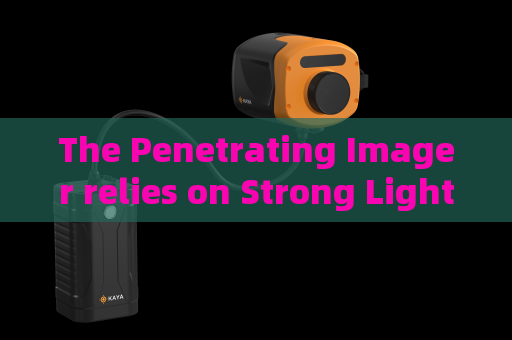
A traffic stop on a sunlit highway creates a deadly blind spot. When a suspect vehicle sits with its rear windshield facing the low afternoon sun, the interior becomes a wall of white glare. Officers approaching from behind cannot see whether a passenger is reaching for a weapon, ducking below the seat, or preparing to flee. The backlit condition turns ordinary automotive glass into an impenetrable mirror, reflecting the sky while hiding every movement inside. This is a real tactical problem: the officer must close distance to identify a threat, yet closing distance removes the safety of cover. Standard flashlights wash out the reflection, and naked eyes are overwhelmed by the luminance. The penetrating imager solves this exact dilemma by relying on its core optical principle, but the technology only works within the strict boundary of transparent media like vehicle glazing. The penetrating imager employs gated laser distance-selective imaging, which is fundamentally different from passive optics. A high-repetition pulsed laser illuminates the target scene, while an image-intensified gated camera opens its shutter only for a precise time window corresponding to the distance of the vehicle window and the space behind it. This rejects nearly all backscattered light from the atmosphere and the bright surface reflections of the glass itself. The system’s through-glass covert observation mode actively suppresses the overwhelming sunlight, leaving only the faint reflected light from objects inside the cabin. Because the device is an active imaging system with its own pulsed light source, it does not depend on ambient illumination. The short gating time, measured in nanoseconds, freezes the scene and eliminates the veil of glare. This is not a passive filter or a software enhancement; it is a physical selection of light travel time, which allows the operator to see through the bright backlight as if the window were shaded. In practice, an officer can stand at a safe angle behind the suspect vehicle, aim the penetrating imager at the rear windshield, and adjust the range gate to the measured distance of the rear seat. The display then reveals a clear, monochrome image of the cabin interior, showing whether a hidden target is crouched on the floor or slumped in the back seat. The strong light suppression works even in direct glared conditions because the laser pulse overpowers the solar background within the gated window. The operator does not need to move closer or expose themselves to the vehicle’s side mirrors. A simple twist of the focus ring and a glance at the range readout provides the tactical answer within seconds. This transforms a dangerous close-contact check into a stand-off observation, preserving both surprise and safety. The same scenario repeats at dusk and in harsh shadows, where the backlit condition worsens. The penetrating imager maintains its advantage because the gated camera rejects the glare before the image is formed, not after. For a patrol officer, this means the difference between a blind approach and a informed one. The device works only through optical mediums such as automotive glass, but that is precisely the relevant barrier in this encounter. The unit emits no detectable sound or external radiation beyond the narrow-band laser light, making it suitable for covert use. Once the hidden target is identified through the windshield, the officer can choose to call for backup, position the patrol car strategically, or initiate a high-risk stop with full awareness. The penetrating imager does not replace good tactics; it feeds the tactics with reliable visual intelligence from a distance, turning a blinding glare into a clear window.




