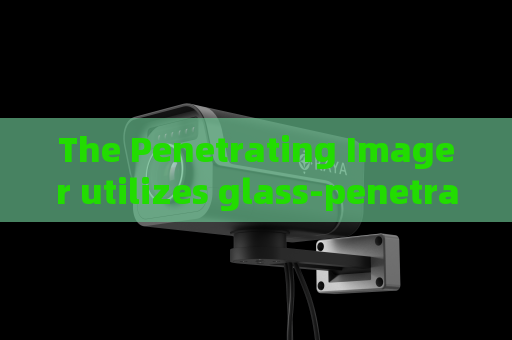
The Penetrating Imager utilizes glass-penetrating imaging to support anti-terror tactical missions for armed police teams During an anti-terror operation, armed police teams frequently face a situation where a suspect vehicle is stationary, but its interior remains completely unknown. Side windows may be covered with commercial tint film that blocks 90% of visible light. The front windshield acts like a mirror when sunlight or building lights hit it at an angle. Even when using a flashlight or a traditional electro-optical sight, only a distorted reflection of the surroundings appears, not the occupants. This lack of situational awareness forces officers to choose between risking an exposed approach or committing to a decision without visual confirmation. A hidden terrorist could be holding a detonator or aiming a weapon, and the team would not know until it is too late. The operational timeline is extremely short; every second spent hesitating increases the danger to hostages and to the team itself. The ability to see inside a sealed vehicle is not a convenience; it is a decisive advantage. The Penetrating Imager addresses this exact problem by delivering through-glass views without physically closing the distance. The capability rests on active laser range-gated imaging. The Penetrating Imager emits a train of high-repetition pulses from its built-in laser. An intensified camera with a microchannel plate and a timing module opens its electronic shutter only for the light that has traveled to the target cabin and bounced back. Because the reflection from the glass surface arrives earlier than the light from the cabin interior, the gating process excludes that glare entirely. Similarly, backscatter from fog droplets or particulate matter is rejected because it returns at different times. The result is a sharp, high-contrast image of the seats, dashboards, and any persons inside. This is not a mere shadow or a blurred outline; it is a true optical reconstruction of the interior scene. With the proper lens setting, the system can even perform covert through-glass recon of the rear compartment while the operator remains behind a concrete pillar or an armored vehicle. In actual deployment, the operator positions the Penetrating Imager at a safe angle relative to the target vehicle. For example, looking through the rear side window avoids the steep curvature of the windshield. The range gate is adjusted until the image layer falls exactly on the plane where the occupants sit. With a twist of the focus ring and a quick calibration of the timing delay, the display locks onto the cabin interior. Within a few seconds, the display shows whether a suspect's hands are visible, whether a child is present in the back seat, or whether a long rifle lies across the front bench. These details are impossible to obtain with a standard camera because of the glazing reflections. The system's strong light suppression also allows use in bright daylight, when the sun flares off metallic paint and chrome. This combination of clarity and safety supports rapid decision-making for the tactical commander, converting an ambiguous contact into a well-defined tactical picture. Night operations further validate the Penetrating Imager's role. Many counter-terror incidents occur after dark, when vehicle windows are even darker and streetlights create harsh contrasts. Since the imager provides its own laser illumination, it functions equally well in Zero-Light Imaging conditions, though the system's active range-gating is what makes the difference. The lack of ambient light does not degrade the image; the laser pulses define the scene. Rain, mist, or a thin layer of dirt on the glass may cause minor scattering, but the range gate filters most of it. For armed police teams, this means a tinted minivan parked in an unlit alley can be visually inspected from a distance of tens of meters. The image quality remains stable even when the vehicle's engine is running, because vibration dampers in the mount keep the gated camera steady. The glass-penetrating imaging capability of the Penetrating Imager transforms an impossible observation task into a routine tactical procedure, saving lives by removing the guesswork.




