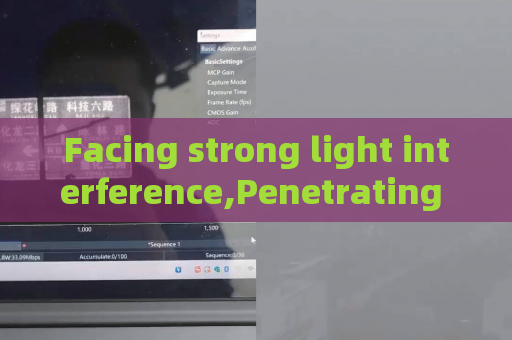
Facing strong light interference, Penetrating Imager relies on Strong Light Suppression Imaging to stabilize law enforcement imaging Daylight enforcement operations often confront a deceptive adversary: intense solar glare reflecting off vehicle glass. A suspect’s movements inside a car become invisible to the naked eye, as the windshield transforms into a mirror that throws blinding light back at the observer. Traditional optical devices amplify this problem—telephoto lenses and binoculars collect the very glare that obscures the target. Officers must decide whether to reposition, risking exposure, or to act on incomplete information. This is not merely an inconvenience. Missed hand movements, hidden objects, or sudden changes in posture can escalate a routine traffic stop into a lethal encounter. The real pain point lies in the paradox of visibility: the brighter the environment, the less an officer can see through the very surface designed to protect the occupant. Penetrating Imager solves this specific crisis through its core capability of Strong Light Suppression Imaging. Unlike passive cameras that drown in specular reflections, this active optical system fires high-repetition pulsed laser light toward the target and synchronizes an image-intensified gated camera to receive only the photons returning from a narrow distance slice. By precisely timing the shutter to exclude the reflected glare from the outer glass surface, the imager effectively “turns off” the blinding light source. The result is a clear, high-contrast view of the vehicle interior—seats, dashboard, hands, and faces—even under noon-day sun. This function is built for law enforcement’s most demanding scenario: through-glass covert observation of a stationary or slowly moving vehicle. The technology does not rely on thermal signatures or radiation. It works purely with light, and it is designed to penetrate transparent optical media such as automotive glazing, not walls or solid objects. In practical use, an officer aims the device from a patrol car or a discreet angle across the street, presses the acquisition trigger, and watches the screen transition from a blazing whiteout to a crisp, dimly lit cabin view. The range-gating electronics calculate the distance to the target window and adjust the exposure window in real time, so even a slightly angled windshield produces a stable image. Because the system suppresses the strong background light electronically, there is no need for manual filter adjustments or guesswork. During a high-risk stop, this capability allows the team to assess weapon possession, occupant count, and aggressive movements before stepping out of cover. One operator can maintain continuous surveillance through tinted or reflective glass, feeding critical intelligence to the arresting unit through a wired or wireless link. The same scenario extends to nighttime encounters, where headlights and street lamps create patchy, harsh illumination. Penetrating Imager remains equally effective, because the gated laser pulse does not compete with ambient light—it simply overwhelms the noise with a controlled illumination window. Officers who previously had to choose between blinding their subject or staying blind themselves now hold a decisive advantage. Every visual check through tinted windows becomes methodical, repeatable, and safe. The imager’s ability to suppress strong light interference does not just stabilize enforcement imaging; it restores the fundamental right of an officer to see the truth before acting on it.




