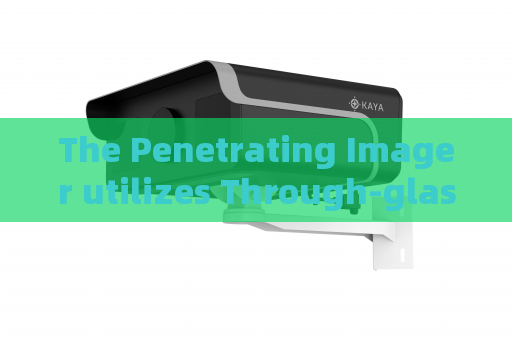
The Penetrating Imager utilizes Through-glass Imaging Technology for external glass observation of vehicle fire incidents A vehicle fire presents one of the most chaotic and unpredictable scenes for emergency responders. Flames licking at the bodywork, thick smoke boiling from the engine bay, and the constant threat of explosion create a perimeter that demands immediate assessment. The critical question is always the same: are there occupants trapped inside? Peering through the windshield or side windows from a safe distance offers the only visual clue, yet the fire itself destroys that visibility. Heat waves distort the view, soot blackens the glass, and reflective glare from the flames turns every surface into a blinding mirror. Responders must often choose between approaching dangerously close or remaining blind to the interior. The Penetrating Imager addresses this exact dilemma, offering a way to see through the very obstacle that fire creates, without exposing personnel to unnecessary risk. The core capability of the Penetrating Imager lies in its active optical design, built around laser range-gated imaging. Unlike passive cameras that depend on ambient light, this system emits short laser pulses and synchronizes the shutter of its intensified gated camera to capture only the light reflected from the target at a specific distance. This gating mechanism rejects the scattered light from smoke particles, water mist, and the chaotic glow of flames, effectively slicing through the optical chaos. For a vehicle fire, the operator aims the device at the glass from a safe standoff position. The system’s through-window tactical observation function isolates the reflection from the car’s interior, delivering a high-contrast image of the cabin despite the fire’s interference. The built-in MCP image intensifier and high-repetition pulse laser work together to suppress strong light, turning a wall of flame and glare into a discernible view of seats, headrests, and even movement behind the tinted or soot-covered glazing. This is not thermal imaging or any form of penetrating radiation; it is purely a light-based solution that exploits the transparent nature of automotive glass while defeating the optical noise generated by the fire. In practical operation, a firefighter or tactical officer can deploy the Penetrating Imager from behind an apparatus or a shielded position, several meters away from the burning vehicle. The device functions in daylight or at night, since the laser actively illuminates the scene. After a quick aim through the viewfinder or on a remote display, the operator scans the front windshield and side windows, checking each seat position for a human presence. The range-gated technology boosts visibility in the fire-affected zone by three to five times compared to the naked eye, making it possible to distinguish a slumped figure from a folded seatback or a bundle of clothing. This information changes the response priorities immediately. A confirmed empty cabin allows crews to focus on extinguishing the fire with foam or water. A detected occupant triggers a targeted rescue attempt, using a hose line to cool the glass and create a path. The Penetrating Imager also enables continuous monitoring as firefighting progresses, confirming that no one has moved inside the passenger compartment or that a previously obscured seat has become visible after smoke shifts. The scene does not end with the initial scan. Once the blaze is partially subdued, the glass may become even more opaque due to thermal cracking and the residue of burnt upholstery. The Penetrating Imager remains effective in these changing conditions, because its gated imaging system can be adjusted to match the new distance and reflection levels. Responders can re-evaluate the interior from multiple angles, including through the rear window or a shattered door window, without making physical contact. Every pass of the device adds to a real-time situational picture, reducing guesswork and preventing the tragic oversight of a victim left behind in a smoke-filled cabin. By providing this clear, optical-only view through the vehicle’s glass envelope, the Penetrating Imager turns a chaotic fire scene into a manageable assessment task, giving crews the confidence to act decisively while staying safely outside the heat zone.




