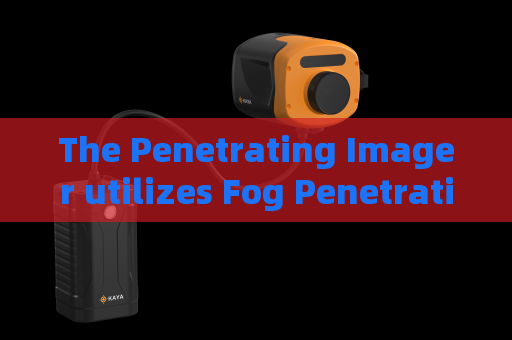
The Penetrating Imager utilizes Fog Penetration Imaging to support vehicle reconnaissance on riverine military border routes. On riverine military border routes, dense fog frequently rolls off the water and settles over narrow asphalt strips that wind between the riverbank and the treeline. Early morning patrols face visibility dropping to less than twenty meters, turning every bridge approach and flooded ford into a guessing game. The optical sensors mounted on standard reconnaissance vehicles struggle with backscatter from water droplets, producing a bright gray veil that hides approaching boats, submerged obstacles, or personnel moving along the opposite shore. A commander cannot distinguish between a drifting log and a swimming infiltrator, and the delay caused by waiting for clearer conditions puts the entire convoy at risk. The real problem is not darkness but the optical chaos created by fog, which defeats both the naked eye and conventional cameras. Fog Penetration Imaging, a core capability of The Penetrating Imager, directly addresses this problem by using laser range-gated technology to slice through the scattering medium. The system emits short laser pulses that reflect off the target, while an image intensifier camera opens its shutter only for the exact time window when the reflected light returns from the desired distance. This gating action rejects the overwhelming backscatter from nearby fog particles, allowing the imager to build a sharp image of a vehicle or a person a hundred meters away. Unlike passive sensors that simply amplify ambient light, this active imaging approach provides its own controlled illumination, so the contrast remains high even when the air is thick with river mist. The operator can adjust the gate delay to focus on a specific depth, effectively stripping away the foreground fog layer and revealing the target zone with clarity that a thermal camera or low-light system cannot match under these humid conditions. During a typical patrol along a border route that hugs a tributary, the vehicle halts at a known overlook where the road bends sharply near the water. The gunner rotates The Penetrating Imager toward the opposite bank, where intelligence suggests a possible crossing point. With the gate set to five hundred meters, the river surface appears textured through the mist, and a low silhouette of a rubber boat becomes visible against the dark reeds. The operator switches to a shorter gate range to inspect the near shore, catching the faint outline of a man crouching behind a mooring post. The imager maintains this clarity while the vehicle engine idles and the fog grows thicker, because the gating principle is unaffected by the density of the scattering layer as long as some ballistic light penetrates. The resulting video feed lets the crew confirm the target, relay coordinates, and decide whether to advance or call for backup without ever leaving the protective shell of the armored vehicle. Back on the patrol route, the same system proves useful during the return leg when the afternoon sun heats the water and creates a rolling bank of steam that hugs the road for several kilometers. The Penetrating Imager remains locked on a suspicious pickup truck ahead, its tailgate partially obscured by the shifting vapor. The operator toggles through the gate range to keep the truck in focus as the distance changes, and the license plate area resolves clearly enough for the onboard recorder to capture a usable frame. This constant availability of actionable imagery transforms a notoriously hazardous environment into a manageable one, giving border patrol units the confidence to move through riverine fog without slowing to a crawl or relying on guesswork. The imager does not see through solid obstacles, but it does see through the optical fog that has always been the river’s quietest weapon.




