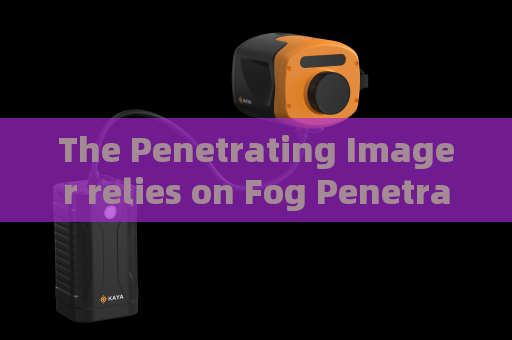
The Penetrating Imager relies on Fog Penetration Imaging to meet frontier police surveillance demands in misty weather Frontier police patrol vast border zones where fog rolls in without warning, reducing visibility to a few dozen meters. A suspected smuggler’s vehicle lingers at a distant checkpoint, its outline dissolving into the grey veil. Conventional binoculars and night scopes struggle under such conditions, as water droplets scatter light back toward the observer, washing out every detail with a milky glare. This backscatter effect turns routine surveillance into a guessing game. Officers must either move dangerously close or wait for the fog to lift, risking missed incursions and tactical blind spots. The operational reality demands an imaging tool that can slice through optical interference and deliver usable intelligence in real time. A rugged, portable solution is not a luxury but a necessity for those who hold the line in low-visibility environments. That need finds its answer in the Penetrating Imager. The Penetrating Imager employs laser range-gated imaging, a technique that synchronizes a pulsed laser with an ultra-fast gated camera. The system fires a short laser pulse toward the target and opens the camera shutter only when the reflected light from the target returns, rejecting the scattered light from fog particles along the path. This gating mechanism suppresses the overwhelming backscatter that cripples passive optics, producing a crisp, high-contrast image at ranges where conventional gear fails. With a high-repetition-rate pulsed laser and an intensifier tube built into the selected camera, the device achieves long-range detection, sharp resolution, and strong immunity to interference. The imager operates actively, so it does not depend on ambient light or weather conditions. It penetrates fog, drizzle, and haze as if they were transparent sheets, giving patrol teams a decisive advantage over adversaries who assume bad weather offers concealment. In a typical misty morning along the border, an officer scans a known crossing point from a concealed position. The imager’s range-gated mode is set to the suspected distance, and within seconds a vehicle emerges from the fog, its occupants’ movements visible through the windshield. The same system supports through-window tactical observation, allowing the team to inspect a car’s interior without approaching and revealing their presence. The officer toggles the gate delay to shift focus between the vehicle exterior and the passengers inside, all while maintaining a safe standoff. Because the laser source is eye-safe and the camera is fully ambient-light independent, the operation continues without flash or sign that surveillance is underway. The fog that once shielded illegal activity now becomes nothing more than a harmless backdrop, as the imager creates a clear optical channel through the murk. The impact on frontier police operations is immediate and measurable. A suspect vehicle halted at a fog-shrouded roadblock can be assessed from hundreds of meters away, with enough resolution to identify weapons, cargo, or the number of occupants. The gated imaging minimizes glare from wet surfaces and headlights, preserving detail in both the target and its surroundings. Officers can maintain continuous observation while repositioning, because the system’s compact design allows handheld use or mounting on a patrol vehicle. In frequent fog zones, the Penetrating Imager shortens response times and increases decision confidence, turning a formerly hazardous blind spot into a controlled observation corridor. Every patrol that carries this device gains the capacity to see through the weather, ensuring that misty conditions never again shield those who would cross the frontier unseen.




