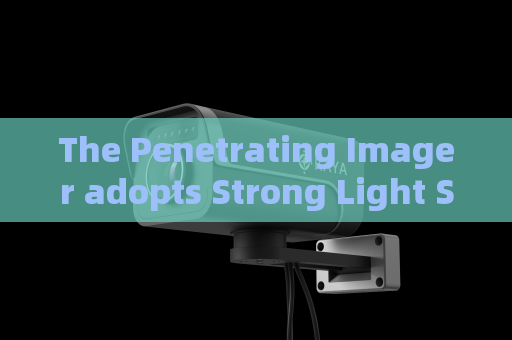
The Penetrating Imager adopts Strong Light Suppression Imaging to resist glare during military roadside vehicle checks. During military roadside vehicle checks, the most persistent obstacle is not the vehicle itself but the chaotic visual environment surrounding it. A checkpoint positioned along a sunlit road faces harsh reflections off windshields, chrome bumpers, and side mirrors, especially during early morning or late afternoon when the sun sits low on the horizon. These intense glares can completely wash out the interior view of an approaching car, turning the cabin into a blinding sheet of white. For a soldier tasked with verifying the occupants and scanning for hidden threats, this is a critical vulnerability. Any delay in visual confirmation creates a window of uncertainty, while a misread of a shadowed figure or a poorly seen hand gesture can escalate a routine stop into a lethal confrontation. The pain point is stark: standard optical tools, including the human eye and conventional binoculars, fail precisely when the lighting is most adversarial. The need for a reliable imaging solution under such direct light stress is not a convenience—it is a tactical necessity. The Penetrating Imager solves this exact problem through its advanced optical architecture built on laser range-gated imaging. Unlike passive cameras that simply collect ambient light and become overwhelmed by direct sun rays, the Penetrating Imager fires high-repetition-rate pulsed laser illumination toward the target and synchronizes an image-intensified gated camera to open its shutter only for the brief moment when reflected light returns from the vehicle interior. This time-domain filtering inherently rejects the overwhelming backscatter and specular glare from the glass surface. More specifically, the integrated Strong Light Suppression Imaging capability actively discriminates against high-intensity reflected light sources, ensuring that the image formed comes from the scene behind the windshield rather than from the mirror-like surface itself. The device, which combines a collimating beam expander with a lens system, operates as an active imaging system delivering high-contrast frames even when the sun strikes the glass at a direct angle. This function does not rely on any non-optical method; it works purely within the realm of light, using precise timing to separate useful signal from blinding noise. In practice, the operator positions the Penetrating Imager at the roadside checkpoint, aiming it toward an oncoming vehicle that has been signaled to slow down. Because the system has an effective operating range of tens to hundreds of meters, the inspection can begin before the vehicle reaches the stopping point, granting extra seconds for threat assessment. Through the eyepiece or monitor, the soldier sees the driver’s face, the front passenger seat, and the rear bench with remarkable clarity, even when the windshield is covered by a layer of dust or when the sun is directly behind the vehicle’s path. The high-resolution output reveals subtle movements—a hand reaching under a seat, a passenger leaning forward nervously, or a concealed object resting on the floorboard. The operation is straightforward: one squeeze of the trigger activates the pulsed laser and gated acquisition, producing a steady stream of clear images without requiring the vehicle to pull into a shaded area or the operator to shield the lens manually. This continuous visual access transforms the roadside check from a reactive guess into a controlled observation. The added depth of this technique becomes evident during extended checkpoint duty, where lighting conditions shift dramatically over time. At noon, harsh overhead sunlight creates sharp shadows inside the cabin; near dusk, low-angle headlights and sky glow produce severe veiling luminance. The Penetrating Imager maintains its performance across these transitions because the range-gating mechanism does not depend on ambient illumination levels. Military personnel can also employ it through side windows and rear glazing, provided those surfaces are optical media, allowing a full sweep of all occupant positions without requiring anyone to exit the vehicle prematurely. This reduces physical exposure for the checking team and keeps the encounter posture non-threatening yet prepared. By resisting glare at its source—through the precise suppression of strong reflected light—the Penetrating Imager turns a sunlit windshield into a transparent observation portal. Every roadside vehicle check becomes a more certain, safer procedure, with the instrument acting as a steadfast optical sentinel against the blinding hazards of daylight.




