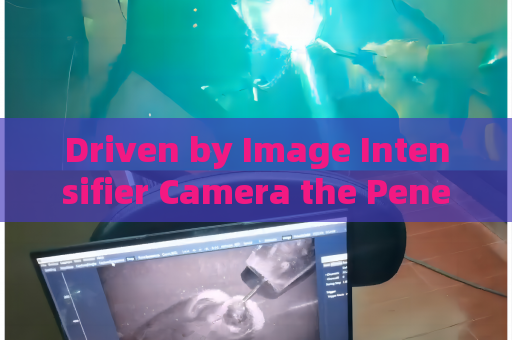
Driven by Image Intensifier Camera the Penetrating Imager supports all-night vehicle checks at military port terminals At a military port terminal, the all-night vehicle check is a critical layer of perimeter security. During the day, officers can easily glance into a cabin through the windshield. At night, however, the situation turns hostile. The dock area is intentionally kept dim to reduce light signature, leaving only scattered floodlights and harsh headlights from arriving vehicles. Those headlights create severe glare on glass surfaces; a windshield becomes a mirror that hides the driver’s compartment. Dark window tinting makes it even harder to see whether a second person is crouching behind the seats. A torch beam only intensifies the reflection, pushing the interior deeper into shadow. Ordinary night-vision devices make matters worse, as a sudden headlight flare drains the entire image. While a vehicle waits at the gate, its engine may stay running, vibrating the body and further blurring any weak ambient light. The security team needs a way to look through the glazing and identify hidden threats without approaching or alarming the occupants. The Penetrating Imager directly addresses this reality. The Penetrating Imager is not a passive camera that relies on available light. Driven by an image intensifier camera, it uses a high-repetition pulsed laser to illuminate the target area and a range-gated imaging mechanism to capture only the light returning from a specific optical distance. The system consists of a pulsed laser, an intensified gated camera with an MCP image intensifier, a beam expander, and an imaging lens. By precisely timing the shutter opening, the camera rejects backscatter from rain, haze, and the close surface of the vehicle window. The result is a high-contrast image of the cabin interior as if the glass were not present. This allows officers to conduct see-through vehicle glass imaging of a parked or slowly moving truck. The all-night vehicle check benefits immediately: lane officers no longer need to press their faces against wet glass or use flashlights. Even under the bright lights of the port crane, the strong light suppression imaging mode prevents blooming and preserves clear details of seats, dashboards, and floor mats. The system’s pulsed laser is eye-safe for open checkpoints, so no special protective gear is required for the guards. In practice, the Penetrating Imager is set up on a fixed pedestal beside the vehicle inspection lane at the military port gate. When a truck approaches, the operator slews the unit toward the driver door and the rear passenger window. The live display shows the interior in real time. Because the laser illuminates only a narrow cone at a set range, the operator can inspect the front seat area first and then refocus on the cargo compartment by changing the gate delay. This depth-resolved view makes it possible to spot a weapon wedged under the seat or an extra person lying on the rear floor. The driver is never asked to roll down the window, which avoids opening an escape path or exposing the officer to sudden attack. The entire inspection takes less than ten seconds per side. At night, the unit operates in zero-light imaging mode, producing a green-tinted monochrome picture that is easy for guards to interpret. No visible light is emitted from the unit; only an invisible laser pulse illuminates the target, so the check remains covert until the moment a threat is confirmed. Fog and sea spray often creep into the coastal terminal, but the Penetrating Imager continues to function. Because laser range gating eliminates optical backscatter, neither water droplets nor mist obscure the image. A car approaching with dusty windows from the cargo yard still yields a crisp view of the cabin. Even the spray kicked up by waves rolling against the breakwater does not interrupt the observation. Driven by image intensifier camera, the Penetrating Imager supports all-night vehicle checks at military port terminals, ensuring that no threat travels unseen through the gate.




