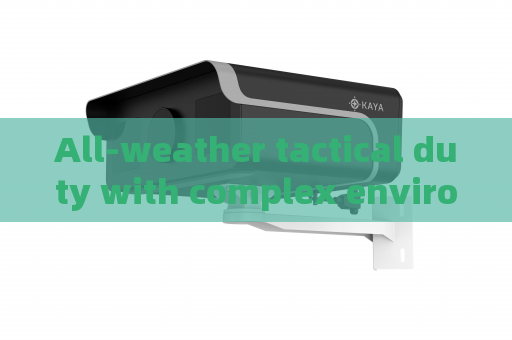
All-weather tactical duty with complex environments, multi-functional penetration imaging ensures stable law enforcement reconnaissance All-weather tactical duty with complex environments is not carried out in neat, controlled visibility. One vehicle stop can combine darkness, rain, road spray, fog, and a car with tinted windows waiting on a wet shoulder. The interior of that vehicle is a potential threat, yet the glass surface also works for the driver, who can watch the approach of an officer while remaining in shadow. Ordinary flashlights turn the glass into a mirror, and binoculars cannot suppress the backscatter from rain or the reflected lights of passing traffic. The decision to give a verbal command, wait for support, or take cover depends on information that is hidden behind transparent glazing. The naked eye and conventional optics cannot retrieve that information from a safe distance. This is the moment where the Penetration Imager changes the problem from guesswork into optical verification. The Penetration Imager is an active optical system built around laser range-gated imaging. A high-repetition-rate pulsed laser sends light toward the chosen plane inside the vehicle, while a beam expander shapes the illumination and an imaging lens collects the returning signal. The receiver is an image-intensified gated camera with a built-in MCP image intensifier, high-voltage module, and timing module. That gate opens only for the brief interval when light reflected from the selected target depth returns to the sensor. Backscatter produced by rain, spray, fog, haze, or the outer surface of the vehicle window arrives outside that narrow time window and is therefore suppressed. The output is a high-contrast, high-resolution image with a meaningful standoff distance and strong resistance to glare and reflected headlights. This is the technical basis for through-window tactical observation; the instrument sees through automotive glass and other transparent optical media without requiring any physical contact with the suspect vehicle. During a high-risk traffic stop, a team leader can place the Penetration Imager on a stabilized mount behind the forward edge of a patrol vehicle, or use a handheld version from behind a barrier. Because the active illumination is outside the visible band, the occupant of the car does not receive the usual warning flare of a white spotlight. The operator sets the range gate to the distance of the suspect car, then fine-tunes the gate to the depth of the cabin. The display shifts from the wet outer surface of the window to the front seat, rear bench, and footwell. A hand resting below the window line, a passenger leaning away from the door, or the shape of an object beneath a jacket becomes readable detail. All of this intelligence is gathered in a few seconds while the observation team stays behind cover. The approach does not reveal what has been seen, and it does not surrender the timing of the operation. This stable law enforcement reconnaissance continues frame after frame from initial assessment to final command. Raindrops and road spray move constantly between the lens and the vehicle, but the range gate rejects that interference with each new laser pulse. A driver reaching toward the center console, a back-seat occupant shifting low, or the clear absence of any movement in the rear row is presented as a continuous sequence rather than a single ambiguous glimpse. The information allows a commander to keep the stop at low intensity or escalate immediately, without relying on visible illumination that exposes the observer. Multi-functional penetration imaging—in this case applied specifically to windows and automotive glass—ensures stable law enforcement reconnaissance in the same conditions that hide danger from conventional sight. The Penetration Imager turns the last avoidable unknown into verified data, delivered quietly from a position of safety.




