A police tactical team arrives at a parking structure on a quiet afternoon, responding to a report of a suspect sitting inside a sedan. The vehicle has heavily tinted windows, and the occupants are not visible from any angle. Officers must determine whether the subject is armed, whether there are hostages, and what the inside of the cabin actually looks like before making a move. Conventional optical aids such as binoculars or spotlights only reflect glare off the curved glass. Moving closer risks alerting the subject and losing the element of surprise. This scenario exposes a persistent pain point for close-quarters reconnaissance: how to conduct a tactical visual check through tinted windows without compromising position or safety, using only available light and a clear optical path, not through walls or other solid barriers.
The Penetrating Imager solves this problem through active laser range-gated imaging, a fully optical method that relies on pulsed laser illumination and a gated camera synchronized to receive only the reflective light from the target distance. When aimed at a vehicle window, the instrument distinguishes the light reflected from the subject and interior surfaces while rejecting the overwhelming backscatter generated by the glass itself. Because the system operates purely in the optical spectrum, it can see through automotive glazing, including laminated windshields and factory-tinted side windows, producing a live, high-contrast image of the cabin interior. The imager does not depend on ambient light, so even a shaded parking deck or a night alley does not degrade the observation. Its narrow gating window can be set precisely to the distance of the vehicle seat, cutting out rain droplets, dust particles, or haze between the operator and the glass that would otherwise obscure the view.
In actual field use, an officer positioned behind a concrete pillar or the bumper of an adjacent car aims the Penetrating Imager at the target vehicle’s front side window. The display shows the suspect’s right hand resting on the center console, a small dark shape under the passenger seat, and the head of a second person leaning low in the rear footwell. This information allows the team to decide whether to initiate a felony stop, deploy a distraction device, or wait for negotiators. The operator can adjust the gate delay to focus on the driver’s seat, then shift the aim to the rear window to check the back seat. Because the system is an active optical imager with strong light suppression capability, harsh sunlight bouncing off the hood does not wash out the image. The throughput is steady and legible, giving the commander real-time intelligence that was previously unavailable without opening the door or breaking the glass—actions that would eliminate any tactical advantage.
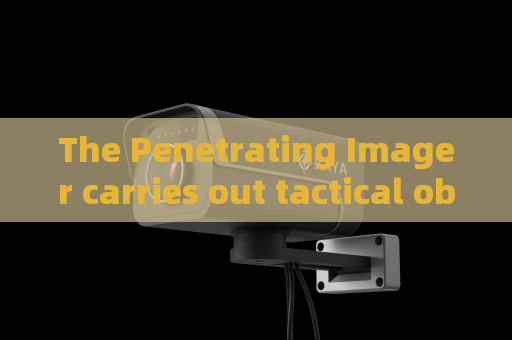
Beyond the immediate identification of threats, the Penetrating Imager supports a longer, quieter surveillance phase during a barricade or kidnapping negotiation. Officers positioned on elevated walkways or across the street can observe subtle movements inside a parked van or a sedan, such as a suspect shifting a weapon or a victim altering position. The high repetition-rate laser and gated camera deliver crisp frames at operational distances, and the ability to work in zero-light conditions means the team never needs to switch on a floodlight. The device remains firmly within the optical domain, providing a "see-through" capability for glass and atmospheric obscurants like fog or smoke, but it offers no information from behind concrete, metal, or other non-transparent barriers. For the specific urgent problem of seeing into a vehicle before making contact, the Penetrating Imager delivers a mature, reliable solution that changes the outcome of countless roadside stops, parking garage raids, and checkpoint encounters.




