Fog blanketing a coastal zone transforms a familiar harbour into an opaque grey void. For a patrol team tasked with identifying approaching vessels or detecting suspicious movement along the shoreline, the loss of visibility is not merely an inconvenience—it is a tactical blind spot. Natural fog is composed of water droplets that scatter visible light in all directions, creating a bright veil near the observer and hiding the distant target. Coastal fog, often mixed with salty aerosol, can persist for hours and shift rapidly with the sea breeze. Under such conditions, standard binoculars and daylight cameras fail to produce a usable image beyond a few metres. Radar can still detect a large contact, but it cannot reveal whether the craft carries cargo or armed individuals on deck. The waiting patrol needs optical confirmation without leaving the protective cover of the pier. The Penetrating Imager is built to meet this need in foggy coastal areas.
The Penetrating Imager is fundamentally different from passive optical systems. It is an active imaging device built around laser range-gated imaging technology, also known as gated imaging. The system integrates a high-repetition-rate pulsed laser, an image-intensified gated camera with internal microchannel plate image intensifier, high-voltage module and timing module, a beam expander, and an imaging lens. Instead of illuminating the entire scene continuously, the laser emits short pulses. The gated camera opens its electronic shutter only for a precise window corresponding to the round-trip time of light reflected from the target. Light scattered back from fog droplets that are closer to the device arrives earlier and is effectively rejected by the shutter. This principle, called Fog Penetration Imaging, enables the receiver to isolate the object of interest while suppressing the blinding backscatter that cripples conventional imagers. Because only the selected depth slice is recorded, the resulting imagery is free of the translucent veil that normally washes out the scene. This explains why the Penetrating Imager maintains high contrast, high resolution, long operating range, and strong resilience to atmospheric interference.
In a practical coastal patrol, the Penetrating Imager is mounted on a stabilised tripod at the edge of a pier. The operator watches a screen that displays the target silhouette through a wall of mist. A small inflatable boat approaching from the open sea, invisible to the naked eye at two hundred metres, appears clearly in the monitor at a range of nearly two kilometres. With the Penetrating Imager, this visual confirmation does not rely on ambient light because the pulsed laser supplies its own illumination. Whether the foggy morning is dim or the sun is obscured, the unit resolves the shape of the hull and the movement of occupants. The timing control can be adjusted to focus on different distances, allowing the operator to shift attention from the waterline to the deck in a few seconds. Such through-fog reconnaissance with the Penetrating Imager provides actionable visual intelligence without requiring the observer to move closer and expose the position.
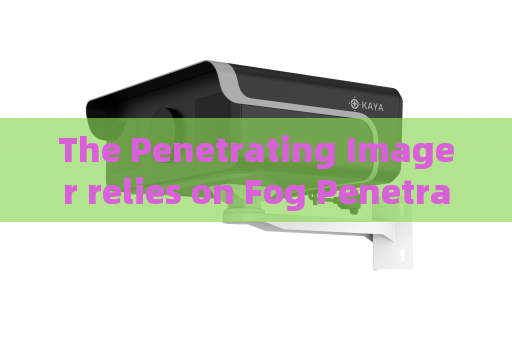
The demanding environment along a foggy coast also requires a degree of adaptation from the imaging system. Salty spray, water condensation and changing optical density across the fog layer are all present. The Penetrating Imager handles these challenges through wavelength selectivity and temporal gating. While coastal fog attenuates light, the range-gated design supports clear imaging of objects at stand-off distances, reducing the risk to the reconnaissance team. Every image produced represents only the light that has travelled to the target and back within the selected time window, which fundamentally defeats the scatter problem. Even when sea fog thickens and surface visibility drops below fifty metres, the unit can still resolve a person-sized object across the harbour mouth. When deployed persistently along this coastline, the Penetrating Imager turns an optically impregnable barrier into a glass-like medium for surveillance.




