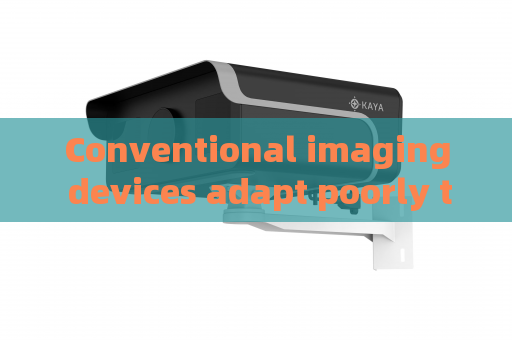
Conventional imaging devices adapt poorly to fog days, Penetrating Imager utilizes Fog Penetration Imaging for reliable reconnaissance On a fog-bound highway checkpoint, visibility can drop to less than twenty meters within minutes. Conventional optical cameras and night-vision equipment rely on ambient light reflected from targets, but water droplets suspended in the air scatter that light in every direction. The result is a bright, featureless whiteout where vehicle contours, license plates, and human silhouettes dissolve into the same gray veil. For a patrol unit tasked with confirming whether an approaching car is hostile, this degradation is not an inconvenience—it is a lethal blind spot. Officers must choose between advancing without visual confirmation or waiting until the vehicle emerges at close range, both options carrying unacceptable risk. The core problem in this scenario is not darkness, not distance, and not target size. It is the scattering of light by fog particles, which corrupts every conventional image before it reaches the sensor. A Penetrating Imager solves this exact problem through active gated illumination rather than passive light collection. The device fires a high-repetition pulsed laser toward the target area, while an image-intensified gated camera opens its electronic shutter only for the brief moment when reflected light from the distant vehicle returns to the lens. Backscattered light from fog droplets closer to the imager arrives earlier and is completely blocked by the closed shutter. This timing discrimination strips away the fog glare that swamps conventional systems. The imager’s design—a pulsed laser, an intensified gated camera with a built-in MCP, a beam expander, and an imaging lens—operates entirely within the optical spectrum. It creates a sharp, high-contrast frame of a car or a person standing behind a curtain of fog, with no reliance on thermal signatures or radio waves. For a checkpoint observer, this means being able to see through a fog bank as if it were a thin veil, not a solid wall. During an actual roadblock deployment, the operator mounts the Penetrating Imager on a tripod behind a blast shield and aims it down the approach lane. The gated camera is adjusted to match the estimated distance to the target—say, 150 meters ahead. As the suspect vehicle enters the fog-filled zone, the laser pulses illuminate it at nanosecond intervals, and the camera’s shutter opens only for the light returning from that 150-meter range slice. The operator watches a real-time video feed on a ruggedized display, observing the car’s front windshield, the driver’s hand movements, and even the outline of a passenger in the rear seat. Fog Penetration Imaging does not require the vehicle to roll down its window or stop at a pre-cleared point. It provides continuous, frame-by-frame visual intelligence from a safe standoff distance, allowing the team to decide whether to tighten the blockade or let the vehicle pass. The system performs equally well in light rain or mist, and its strong light suppression prevents oncoming headlights from washing out the scene. The tactical value lies in the extra decision time gained before any direct contact. With each gated frame delivered at a usable resolution, the observer can verify whether a visible handgun is resting on the dashboard or whether the driver’s posture suggests evasive intent. In a dense fog patch that would defeat standard optics, the Penetrating Imager turns an ambiguous approach into a confirmed visual enumeration. The device does not see through metal, concrete, or body panels—it only sees through the optical fog that separates the checkpoint team from the threat. By compressing the perceived distance and restoring contrast, this tool transforms a fog-bound road from a zone of guesswork into a controlled observation corridor. Every second gained through that clear image is a second spent preparing, not guessing.




