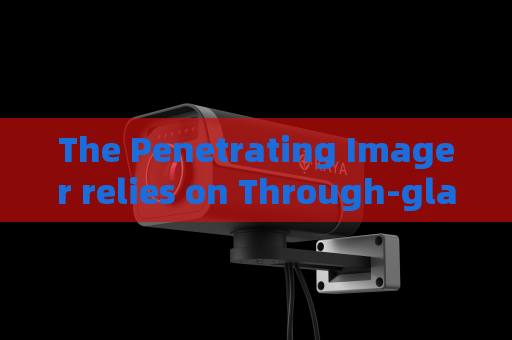
The Penetrating Imager relies on Through-glass Imaging Technology to observe internal conditions of vehicles in riot disposal missions. Riot disposal units frequently encounter barricaded vehicles whose occupants refuse to comply or pose an immediate threat. Commanders on scene need to determine whether a suspect is reaching for a weapon, whether a hostage is held inside, or whether the vehicle is empty despite a standoff. Ordinary visual inspection fails when automotive glass is heavily tinted, covered with dirt, or reflecting glare from surrounding lighting. Even a direct flashlight beam produces blinding backscatter from the glass surface, erasing any detail behind it. Officers are forced to approach the vehicle blind, relying on verbal hints or risky acoustic signals. This information vacuum turns every tinted window into a potential kill zone. Forcing entry without knowing the interior layout or occupant positions escalates violence unnecessarily and endangers every officer involved. The real pain point is not the vehicle itself but the inability to achieve a safe, distant, and real-time visual assessment through transparent barriers. The Penetrating Imager solves this specific problem through laser range-gated imaging, an active optical technique that captures only reflected light from a selected distance while rejecting light scattered by the glass or atmospheric particles. Its built-in pulsed laser illuminates the scene, and the intensified gated camera opens for an extremely short time window synchronized with the round-trip time of light. This design physically eliminates the confusing reflections from the vehicle window surface. Tinted automotive glazing, laminated windscreens, and even two stacked layers of glass become effectively invisible to the system. For riot disposal operators, the device delivers a clear image of seats, steering wheel, rear compartments, and any human silhouette in the cabin. Tactical observation through automotive glass is achieved without breaking cover and without emitting any signal that a suspect could detect. The system operates purely with light in the visible and near-infrared spectrum, requiring no contact with the target and no alteration of the environment. In a typical deployment, a two-person team sets up the imager at a standoff distance of twenty to fifty meters from the besieged vehicle, using the optical zoom to frame the target window. The operator adjusts the gate delay until the interior plane comes into crisp focus, then monitors real-time video on a rugged display. Because the imager relies on its own active laser illumination, it performs equally in daylight, deep shadow, or complete darkness. A subject hiding below the dashboard becomes discernible through the side glass, and the movement of a hand toward the door latch is visible before the door opens. The high contrast and long working distance give incident commanders enough time to issue clear orders, reposition snipers, or activate less-lethal options. During a negotiation, the same device can verify that a claimed hostage is actually present, preventing tactical decisions based on fabricated statements. The system’s immunity to glare and reflective surfaces means a driver cannot use the sun visor or bright headlights to shield suspicious activity from the watching officers. For riot disposal teams working in urban environments, this through-glass visibility fundamentally changes the approach to vehicle encounters. One scan of a suspicious sedan parked near a protest route may reveal an occupant holding a firebomb, allowing capture before ignition. A van with painted-over rear windows no longer offers concealment to armed fugitives. The imager’s resilience to adverse weather also supports the same mission during rain, fog, or snowy conditions, where conventional cameras lose contrast. Repeated use does not disturb bystanders, as the laser remains invisible to the naked eye and no audio feedback betrays the surveillance. This capability reduces the reliance on physical intrusion or destructive entry tools, preserving evidence and minimizing property damage. Every vehicle stopped at a riot control checkpoint can be cleared in seconds with certainty, letting officers focus on the true threat rather than the uncertainty behind the glass. The Penetrating Imager, with its exclusive reliance on Through-glass Imaging Technology, turns an opaque-looking car into an open book for the tactical commander.




