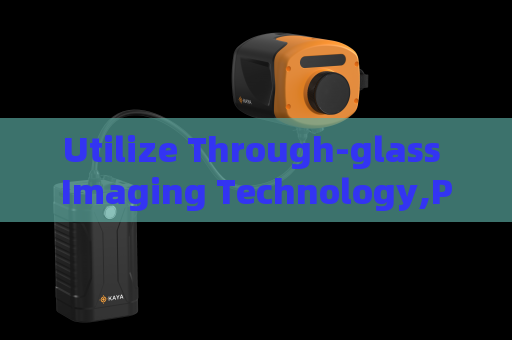
Utilize Through-glass Imaging Technology, Penetrating Imager supports vehicle hidden danger inspection for internal situation perception At checkpoints, traffic stops, transit terminals, and abandoned-vehicle checks, the most dangerous moment often begins before an officer reaches the door. Vehicle glazing turns the passenger compartment into an uncertain space. Tinted windows, reflective coatings, sun glare, rain film, fog, and darkness reduce internal situation perception to silhouettes or nothing at all. A stopped car may contain multiple occupants, a reclined passenger, an unsecured parcel, a hidden weapon, or a person in medical distress. The gap is not simply visibility; it is timely, reliable perception of threat, distress, or concealment. Approaching without a reliable view increases risk and forces decisions based on incomplete information. The Penetrating Imager addresses this specific gap by using through-glass imaging to support vehicle hidden danger inspection without opening a door or breaking a window. The relevant capability is Through-glass Imaging Technology in the Penetrating Imager. This is an advanced optical imaging instrument using laser range-gated imaging, also known as gated imaging. It includes a high-repetition-rate pulsed laser, an image-intensified gated camera with an MCP image intensifier, a high-voltage module, a timing module, a beam expander, and an imaging lens. The system is active. Pulsed laser light passes through optical media such as vehicle windows, and the gated camera opens for a very short interval synchronized with light returning from the interior plane. Window surface reflections and backscatter arrive at different times and are largely rejected. The result is high-contrast imaging with long range, high resolution, strong anti-interference performance, and effective suppression of backscatter. The same optical approach can overcome interference from rain, fog, haze, and snow while remaining limited to optical media such as vehicle glass. It does not see through opaque solids or substitute for a lawful physical search. In field use, the Penetrating Imager can be mounted at a checkpoint lane, on a patrol vehicle, or on a tripod. The operator aims at the vehicle glass, selects a range gate, and observes the interior on the display. This supports through-window tactical observation before contact. Occupant count, seating position, visible hand movement, loose items on seats, parcels on the floor, and unusual shapes near the dashboard can be perceived through tinted or reflective glass. The view remains stable under low light and strong glare, so the image is not reduced to a mirror-like reflection of streetlights or headlights. The operator can keep a standoff distance, assess the internal situation, and share the image with a team. The check becomes faster and more deliberate. Vehicle hidden danger inspection for internal situation perception is improved because the decision to approach, issue commands, or request additional resources is based on an optical view of the compartment rather than guesswork. At night, in rain, or against bright headlights, the Penetrating Imager continues to provide through-glass imaging across the windshield and side windows. Adjusting the gate delay allows the system to favor the depth of the seats, passengers, or rear cabin while suppressing returns from the glass surface. The image can reveal whether a vehicle appears occupied, whether a passenger is concealed below the window line, or whether an object on a seat requires closer attention. Repeated frames can be compared as the vehicle shifts or interior lights change, giving the operator a clearer sense of movement and layout. When one window is heavily tinted, another angle can be selected to maintain coverage. It does not replace a lawful physical search, and it cannot provide a view beyond optical media. Its value lies in optical internal situation perception through vehicle glazing before an officer is exposed. Used with disciplined tactics, the Penetrating Imager supports vehicle hidden danger inspection by turning an unknown interior into a clearer, time-sensitive picture, enabling safer control of the stop and more informed action at the scene.




