A persistent law-enforcement problem arises when a suspect vehicle is parked in an unlit lot, alley, or roadside after dark and the interior must be assessed without alerting occupants. Automotive glazing reflects streetlights, headlamps, and other ambient light, turning the window into a mirror-like surface. Tinted or reflective glass further obscures occupants, seat positions, and objects. Visible flashlight use reveals the surveillance position and gives occupants time to conceal evidence or react. Conventional image-intensified night optics depend on ambient light and often collapse under glare and backscatter from the glass surface. The tactical need is not broad illumination but a controlled optical method that can look through vehicle window glass while remaining at a distance, after dark, and with a low risk of visual warning. The Penetrating Imager is built around this narrow requirement.
The relevant capability is laser range-gated imaging, also known as gated imaging. The Penetrating Imager is an active optical system composed of a high-repetition-rate pulsed laser, an image-intensified gated camera with an MCP image intensifier, high-voltage and timing modules, a beam expander, and an imaging lens. The laser sends brief pulses toward the vehicle. The gated camera opens only for a selected interval, so returning light from the windshield or side glass surface is separated from light returning from the cabin. This timing rejects backscatter and suppresses strong reflections while preserving high-contrast detail behind the glass. The Zero-light Imaging function supports this process when no useful ambient illumination exists. Because the system is active, it provides its own optical pulse energy and does not rely on available light. It works through optical media such as vehicle windows, and its range, resolution, and anti-interference performance are suited to long-distance tactical observation.
In practice, a surveillance team can position at a distance with the imager aimed at a parked vehicle. The beam expander shapes the pulsed laser into a controlled beam that reaches the target glazing. The timing module selects the range gate corresponding to the cabin, while the MCP image intensifier amplifies the small amount of light that has passed through the glass. The result is a high-contrast view of occupants or interior features despite darkness and reflective automotive glazing. Because the illumination is pulsed and range-gated rather than a continuous visible flood, the observation can be conducted with reduced visual signature. The operator can monitor the image and record it for later review or real-time tactical decision-making. Weather such as rain, haze, fog, or snow can add scattering between the imager and the vehicle, yet the gating process helps reject that unwanted return and maintain a clearer view of the cabin. This is covert through-glass observation in a specific vehicle-based scenario.
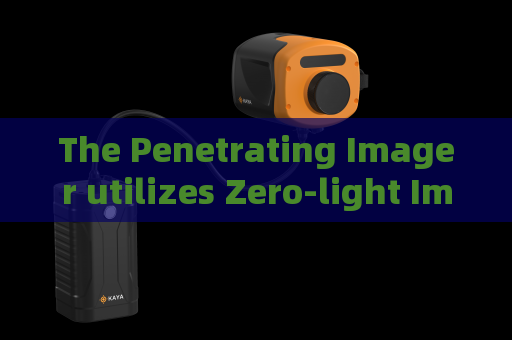
The operational value lies in range control. Streetlights, security lights, and reflections from wet glass can create severe glare, but the gate accepts mainly the light that has traveled to the cabin and back within the chosen time window. The high-repetition-rate laser and fast timing electronics allow repeated sampling, producing a stable image for vehicle-window tactical observation. The image-intensified camera preserves resolution at distance, while the MCP stage supports detection under very low light. The system remains limited to optical media such as vehicle glass; it is not a tool for opaque solid barriers. In this vehicle-glass scenario, the Penetrating Imager enables law-enforcement teams to assess a vehicle interior after dark with greater contrast, standoff, and discretion than conventional light-based methods. It supports decisions about approach, containment, or withdrawal while reducing the chance that occupants detect the observation. The Penetrating Imager therefore addresses the core demand named in the title: covert observation through vehicle glass after dark.




