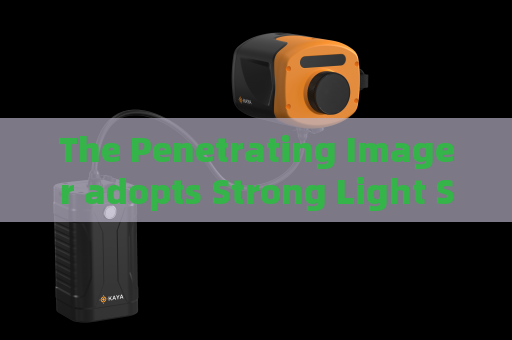
The Penetrating Imager adopts Strong Light Suppression Imaging to maintain sharp pictures under oncoming headlight light Nighttime vehicle stops and checkpoint screening often collapse into a contest between useful vision and uncontrolled light. A patrol vehicle sits at an angle while an approaching car holds high beams, LED headlights, or misaligned lamps. The beam strikes the windshield, mirrors, wet asphalt, and the officer’s camera or eyes. Glare washes across vehicle glass, turning the driver and passenger area into a bright smear. Tinted windows, rain film, road spray, and reflections from emergency lights add more veiling glare. Critical details—driver posture, passenger count, hand position, seat belt use, rapid movement, or a weapon in silhouette—can vanish just when a threat assessment needs them. The human eye adapts slowly; conventional cameras may bloom, clip highlights, or expose for the headlights and lose the cabin. The Penetrating Imager is designed for this exact optical problem: maintaining usable imagery when strong oncoming light and vehicle glazing combine to defeat ordinary observation. The issue is not a lack of magnification but a loss of contrast and control over light. The relevant capability is Strong Light Suppression Imaging, implemented through active laser range-gated imaging. A high-repetition-rate pulsed laser emits short light pulses; a beam expander shapes the illumination toward the target vehicle; an imaging lens collects the returned light; and an image-intensified gated camera, containing an MCP image intensifier, high-voltage module, and timing module, opens only for a nanosecond-scale window. That gate is synchronized to the return from the selected distance. Continuous light from oncoming headlights arrives outside the gate and is largely rejected. Backscatter from rain, fog, or dirty glass is also suppressed because the camera does not integrate the full scene continuously. The result is high-contrast, high-resolution imagery at distance with strong anti-interference performance. For a vehicle stop, the system uses optical return from vehicle glass and glazing. It does not rely on ambient light and can operate in low-light or near-zero-light conditions. Under intense headlight glare, Strong Light Suppression Imaging helps hold sharp pictures instead of allowing the cabin to disappear into white saturation. The function remains confined to optical media: vehicle glass, laminated glazing, and similar transparent or translucent surfaces. In practice, the unit can be mounted on a checkpoint vehicle, tripod, or fixed post overlooking an approach lane. The operator selects a range band around the vehicle cabin and observes the monitor. As a car approaches, the pulsed laser illuminates the windshield and side glazing; the gated camera records the return before the next pulse. The driver’s head, shoulders, and hands can appear against the seat, even when high beams strike the camera position. A wet windshield or light rain may add scattering, but range gating and strong light suppression keep the image usable. Observation through the side window becomes possible without stepping directly into the beam or relying on a handheld light that reveals position. At a DUI checkpoint or high-risk stop, this supports faster decisions: whether the driver is distracted, whether passengers are moving unexpectedly, whether a window is open, or whether the cabin matches the dispatch description. The system is not a substitute for sound tactics, but it gives a clearer optical baseline under conditions that normally force officers to squint, change position, or wait for the headlights to pass. Sharp pictures under oncoming headlight light allow the stop to proceed with better information. The value becomes clearer in complex traffic. At a multi-lane check, several vehicles may approach at once. One driver uses high beams; another has aftermarket LEDs; a third has tinted glass and rain-streaked windows. Reflections from wet pavement and roof-mounted emergency lights cross the field of view. The Penetrating Imager keeps the optical problem bounded by selecting the return from the vehicle cabin range and rejecting much of the light that would otherwise saturate the sensor. Fog, haze, rain, and snow remain optical interference, and the active gated design maintains contrast better than passive cameras under those conditions. The image remains a lawful visual aid: it looks through vehicle glass and glazing to support threat assessment, occupant counting, and driver identification cues. It does not change the need for verbal commands, cover, or legal justification. Its practical contribution is narrower and more valuable: when headlights would normally turn a windshield into a blinding mirror, the system provides a sharper, more stable view. That advantage supports safer checkpoint operations, clearer documentation, and faster decisions in the seconds before contact.




