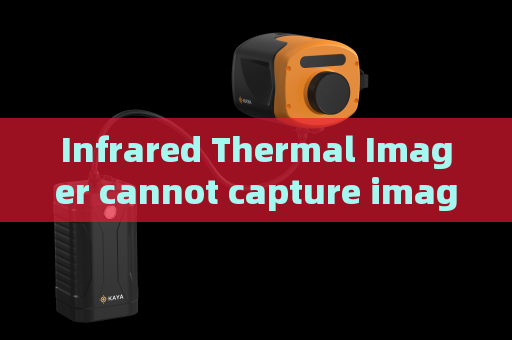
Infrared Thermal Imager cannot capture images behind tinted glass The Penetrating Imager makes up for law enforcement surveillance gaps Law enforcement surveillance frequently targets vehicles with tinted windows at checkpoints, high-risk traffic stops, border approaches, and public events. Thermal infrared imaging depends on emitted heat. Tinted automotive glass, especially laminated or deeply dyed glazing, absorbs, reflects, or scatters much of that signal before it reaches the sensor. The glass itself may dominate the image with its own surface temperature and reflected background heat. The result is a flat, featureless pane. An infrared thermal imager cannot capture images behind tinted glass; occupants, seating positions, hand movements, weapons, or contraband remain hidden. Officers face a genuine operational blind spot. A vehicle may appear unoccupied while several people are inside. A tactical plan may be built on incomplete visual information. A stop may begin without knowing whether an armed subject sits in the rear seat or whether a child is present. The Penetrating Imager addresses this gap by using active optical imaging rather than passive heat detection. The relevant capability is laser range-gated imaging, also called gated imaging. The instrument is an advanced optical system built around a high-repetition-rate pulsed laser, an image-intensified gated camera with an MCP image intensifier, high-voltage module, and timing module, a beam expander, and an imaging lens. The system is active: short light pulses are projected toward the vehicle, and the camera opens only for a narrow time slice that matches the return from the target depth. Light reflected from the outer glass surface arrives early and is rejected; light that passes through the tinted glass and returns from the cabin interior is captured. This depth-selective timing rejects surface glare and scattered light, preserving contrast. The design delivers high-contrast imaging, long range, high resolution, strong anti-interference, and effective suppression of backscatter. The method supports through-glass surveillance of vehicle interiors because automotive window glass is an optical medium. It is an active optical imaging instrument, not a thermal camera and not a non-optical detection device. In practice, officers set the imager on a tripod or vehicle mount at a safe distance and align it with the target window. The pulsed laser illuminates the glazing; the gated camera collects returning light from the cabin. Real-time imagery can reveal occupants, their approximate positions, and visible movement. The operator can record still images or video for briefings and evidence. The system does not require opening a door, breaking glass, or making direct contact. It supports tactical visual checks through tinted windows during a stop, before approach, or while maintaining cover. A two-officer team can use it with one member monitoring the image while another provides security. The image can be shared with command elements through secure communications for coordinated action. Because imaging is active and range-gated, glare from streetlights, headlights, and wet glass can be managed more effectively than with passive thermal viewing. The result is a clearer interior view for decisions about containment, negotiation, or emergency entry. The method remains limited to optical media such as vehicle window glass; opaque solids are outside its operating scope. The operational value lies in reducing uncertainty at the moment of contact. A tinted window no longer forces a choice between approaching blind or withdrawing. The Penetrating Imager gives officers a real-time optical view of the cabin while the vehicle is still intact and the distance is controlled. It can be used from a concealed position, at a checkpoint lane, or during mobile surveillance. The captured imagery helps confirm whether a vehicle contains passengers, whether movement suggests a threat, and whether a tactical response should escalate or de-escalate. Its high-resolution, high-contrast output is built for observation at range, and its active gated design resists interference from ambient light and backscatter. The vehicle glazing no longer marks the end of useful observation. The result is better situational awareness before any contact and stronger safety for officers and bystanders. That is the operational gap filled in law enforcement surveillance.




