At border checkpoints, inspection lanes often fill with vehicles whose windows are darkened by factory tint, aftermarket film, or layered privacy glazing. The glass may reduce visible transmission while reflecting inspection lights, turning windows into mirrors. Officers need to assess drivers, passengers, seating positions, loose packages, and suspicious items before opening a door or directing a vehicle to secondary inspection. Tinted glass creates a visual barrier that defeats flashlights, mirrors, and natural light. A strong lamp can worsen the problem by producing a bright surface reflection. The occupants remain hidden, while traffic delays grow and safety risks rise. Smugglers and transporters understand this gap and use legally installed tint as a screen. A routine check can become a slow, hands-on search that exposes officers to unknown hazards. Border security teams choose the Penetrating Imager for this checkpoint problem, restoring a rapid visual assessment capability at the lane.
The Penetrating Imager addresses this problem through laser range-gated imaging. It is an active optical system built around a high-repetition-rate pulsed laser, a beam expander, an imaging lens, and an image-intensified gated camera with an MCP image intensifier, high-voltage module, and timing module. The laser sends short pulses toward the vehicle. The camera opens its gate only for the brief moment when light returns from the selected range, so surface glare and backscatter are rejected. The selected range can be adjusted to the vehicle cabin, so light returning from the glass surface or distant background is largely excluded. The high-repetition-rate laser provides enough pulses for real-time, video-like refresh, while the image intensifier raises sensitivity under low light. The result is a high-contrast image through tinted glass. This function supports through-window tactical observation without lowering a window or opening a door. The system works only through optical media such as vehicle glass, not through opaque solids. It can also maintain clarity in fog, haze, rain, snow, and fire glare.
In field use, a border security team can place the imager on a tripod, vehicle mount, or fixed checkpoint position. The operator aims at the windshield or side glass from a safe standoff distance. The pulsed light passes through the tinted glass, and the gated camera captures the returning signal. A real-time display then shows occupants, cabin layout, seat positions, and visible objects carried or placed inside. The image is sharp enough to guide decisions about verbal commands, door opening, or referral to secondary screening. The display can be viewed by one operator or shared with a supervisor. If the cabin appears empty or normal, the vehicle proceeds. If a passenger is hidden in a footwell or a package is held below the window line, the team can act before contact. The check becomes faster and less intrusive. Officers avoid leaning close to dark glass with limited visibility. Traffic flow improves because most vehicles can be visually cleared without a full physical search. The same optical principle supports night operations, low-light conditions, and strong glare from headlights or checkpoint lamps.
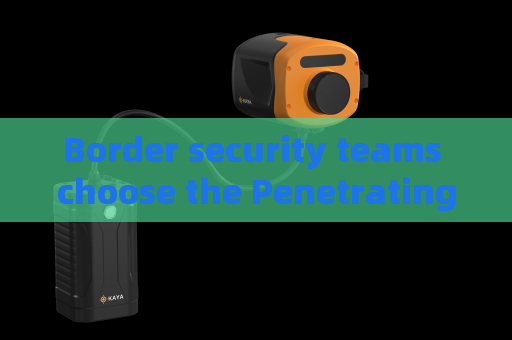
The operational value lies in distance, resolution, and interference control. Tinted glass reduces ordinary visible light, but the Penetrating Imager supplies its own pulsed illumination and amplifies only the light returning from the vehicle cabin. Range gating reduces the washout caused by reflections from glass surfaces, rain, and nearby lights. The system does not rely on non-optical detection methods. It remains a light-based instrument for glass and atmospheric optical media. The effective range depends on glass condition, angle, and atmospheric transmission, but active illumination provides a stable advantage over passive viewing. It is not a substitute for physical search when legal grounds require one, but it informs how that search is conducted. For border security teams, a tinted window no longer ends visual observation. Border security teams choose the Penetrating Imager to bypass tinted glass visual barriers because it turns a common concealment tactic into a manageable checkpoint condition. The imager helps confirm occupancy, identify immediate threats, and decide the next safe action while keeping inspection lanes moving.




