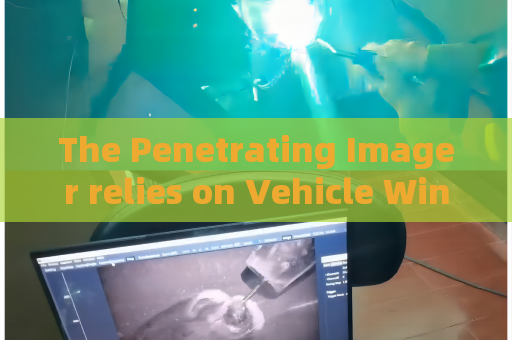
The Penetrating Imager relies on Vehicle Window Penetration to assist anti-smuggling law enforcement on frontier road checkpoints Frontier road checkpoints face a specific enforcement problem: vehicles arrive with closed cabins, tinted glass, reflective windows, and concealed compartments. Smuggling networks exploit remote routes, night hours, rain, dust, and fog to obscure cabin contents. Officers at a checkpoint must decide quickly whether a vehicle merits secondary inspection, yet direct visual checks are limited by glazing, glare, and weather. Opening every door is slow, exposes personnel to risk, and disrupts legitimate traffic. The Penetrating Imager addresses this bottleneck by turning the vehicle window into an optical access point rather than a barrier. The need is not general search capability; it is a rapid, non-contact visual assessment through automotive glazing at the roadside. The Penetrating Imager is an active optical imaging instrument built around laser range-gated imaging, also known as gated imaging. A high-repetition-rate pulsed laser, beam expander, imaging lens, and image-intensified gated camera with an MCP image intensifier, high-voltage module, and timing module form the core. The system sends short light pulses and opens the camera gate only for returns from the selected distance. This timing rejects backscatter and suppresses strong light, producing high-contrast images at distance with high resolution and strong anti-interference. Vehicle Window Penetration is the relevant capability here. It permits through-glass surveillance of a vehicle cabin without opening a door or breaking a seal. The operational boundary is optical media, including vehicle window glass, train windows, aircraft windows, and glass facades. Fire, fog, haze, rain, and snow are optical media that the instrument can also overcome for clearer imaging, though dense smoke remains a limitation in fire conditions. The checkpoint application stays fixed on vehicle glazing. At a frontier road checkpoint, the imager can be mounted on a tripod, checkpoint post, or patrol vehicle and aimed at the target window from a safe standoff distance. The operator adjusts gate delay to match the window plane and cabin depth, watches the display, and compares the visible shapes against expected seat, headrest, dashboard, and cargo layouts. A tinted rear window that looks opaque to the unaided eye can yield enough contrast to reveal anomalous bundles, stacked packages, or modified interior panels behind the glass. The check is fast enough to support traffic flow. A suspicious result directs the vehicle to a controlled secondary lane, where a lawful physical search follows. A clean result supports release without unnecessary delay. Night operations benefit from active illumination, while headlights, flashlights, and checkpoint lamps are suppressed rather than allowed to wash out the image. Rain and road spray on the glass can still degrade results, so officers may choose a drier window or a different angle. The method remains a visual, optical inspection. It does not replace hands-on search, documentation checks, or intelligence-led targeting. It gives officers a better first look before those steps. For anti-smuggling teams, the value lies in repeatable use under frontier conditions. A checkpoint may process mixed traffic in isolated terrain, with limited lighting and harsh weather. The imager can conduct through-glass covert observation or overt inspection depending on the stop posture. When a driver claims an empty cabin, the displayed image can confirm or challenge that account through the window. When contraband is pressed against door panels or hidden under blankets, the optical contrast may reveal density changes and irregular outlines. The Penetrating Imager relies on Vehicle Window Penetration in this anti-smuggling law enforcement setting at frontier road checkpoints by shortening the gap between suspicion and verification. It keeps the first inspection outside the vehicle, preserves the scene, and helps officers decide where a lawful, targeted search is justified. The instrument can also overcome fog, rain, snow, and haze as optical media, so the checkpoint does not lose its window-level view when weather closes in. That consistency matters on frontier roads, where smuggling attempts often coincide with poor visibility and long queues. In this single checkpoint scenario, the instrument serves as an optical screening aid focused on vehicle glazing, weather resilience, and rapid tactical observation.




