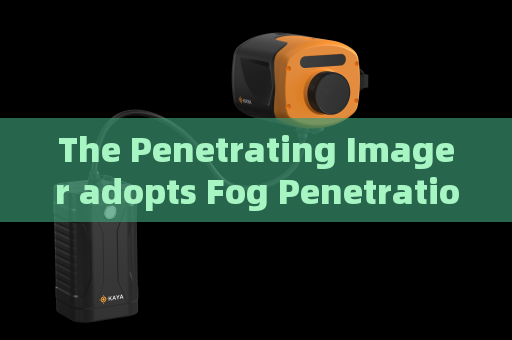
The Penetrating Imager adopts Fog Penetration Imaging to support long-term vehicle monitoring along coastal defense lines Coastal defense lines impose a demanding surveillance problem. Salt-laden fog, sea haze, driving rain, and shifting glare can reduce optical contrast within seconds. A vehicle approaching a checkpoint, ferry landing, or restricted coastal road may remain invisible to conventional cameras until it is dangerously close. Long-term vehicle monitoring requires more than a short burst of clarity; it requires continuous classification of vehicle type, direction, speed, and occupancy across hours of poor visibility. Window glass adds another barrier. Tinted or reflective automotive glazing can hide occupants and cargo from ordinary observation, while low-light conditions after dusk erode detail further. Patrols cannot stop every vehicle without disrupting traffic and exposing positions. The Penetrating Imager addresses this operational gap as an advanced optical imaging instrument designed for adverse atmospheres and glass-mediated observation, not as a substitute for any non-optical search device. The relevant function is Fog Penetration Imaging based on laser range-gated imaging, also known as gated imaging. The Penetrating Imager is an active optical system. A high-repetition-rate pulsed laser emits short light pulses, a beam expander shapes the beam, and an image-intensified gated camera receives the returning light through an imaging lens. Inside the camera, an MCP image intensifier, high-voltage module, and timing module synchronize the gate with the pulse. The gate opens only for a brief interval corresponding to the target distance. Light scattered by fog, haze, rain, or snow near the camera is rejected before it can wash out the image, so backscatter is strongly suppressed. The result is high-contrast, long-range, high-resolution imaging with strong anti-interference performance. The same optical principle supports observation through vehicle windows, high-speed rail windows, aircraft portholes, and glass curtain walls. The optical path remains limited to transparent or semi-transparent media; opaque panels do not transmit the imaging light. In coastal fog, the imager can maintain a clear view of vehicles where passive cameras fail. For sustained coastal vehicle monitoring, the imager can be mounted on fixed towers, mobile patrol platforms, or concealed coastal observation posts. A gated viewing channel can be set to the distance of an approaching road segment, with adjustment as vehicles move. Through-glass surveillance becomes practical at checkpoints and inspection lanes: the system can examine vehicle glazing for occupant silhouettes, seating patterns, and visible objects without requiring a stop. Tinted windows remain challenging for conventional optics, but active gated imaging improves contrast and reduces glare from reflections. Monitoring teams can record continuous video, log vehicle appearances, and compare movement against known patterns. Because the system works in fog, haze, rain, snow, and low-light conditions, it supports long-term watching rather than intermittent clear-weather observation. It does not defeat opaque vehicle bodywork or sealed cargo containers; its value lies in optical access through glass and atmosphere. The imager can remain at a fixed gate depth for hours, providing a stable observation corridor for routine coastal traffic. The practical effect is a steadier coastal defense picture. A vehicle emerging from a fog bank can be detected earlier, classified with greater confidence, and tracked as it passes successive observation points. Gate depth can be tuned to focus on a specific lane, gate, or glass surface, reducing clutter from foreground spray and background lights. Strong light suppression prevents headlamps or harbor lights from overwhelming the image, while the active optical return preserves detail in shadowed cabins. The Penetrating Imager serves to turn fog from a blind spot into a manageable optical condition. Its contribution to long-term vehicle monitoring along coastal defense lines is not a single alert but a continuous, glass-aware, weather-resistant visual record that supports timely decisions, evidence review, and persistent coastal vigilance. Successive posts can hand off the same vehicle track, preserving continuity when fog thickens or rain intensifies. The recorded sequence can be reviewed later to confirm timelines and support operational briefings.




