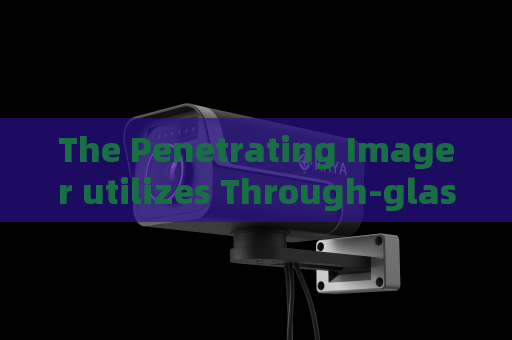
The Penetrating Imager utilizes Through-glass Imaging Technology to track target vehicles in joint military-police patrols. Joint military-police patrols often need to identify and track target vehicles without creating a visible checkpoint or alarming occupants. The hardest part is glass. Tinted side windows, reflective windshields, rain-slicked panes, condensation, and glare from streetlights or oncoming headlights turn a vehicle into a moving optical barrier. Patrol teams may see the body, plates, and movement, yet lose the cabin, occupants, hand movements, or object transfers behind layers of automotive glazing. Long-range observation becomes unstable when reflected light overwhelms the sensor. At night, low illumination and headlight flare make continuous tracking worse. Covert surveillance requires remaining at a distance; a direct visual check or sudden stop can expose the patrol and cause the target vehicle to accelerate or alter route. The Penetrating Imager addresses this narrow but critical gap: tracking target vehicles through glass during joint military-police patrols while preserving standoff distance and tactical surprise. The relevant capability is laser range-gated imaging, often called gated imaging. This advanced optical imaging instrument is built around a high-repetition-rate pulsed laser, an image-intensified gated camera containing an MCP image intensifier, high-voltage module and timing module, a beam expander, and an imaging lens. It is active, illuminating the scene with pulsed light and opening the camera gate only for a very short interval. Returns from window surfaces, rain, fog, haze, and other scattering layers arrive earlier and are largely rejected; light returning from the target vehicle behind the glass arrives within the selected range slice and is captured with high contrast. This produces long-range, high-resolution images with strong anti-interference performance and effective backscatter suppression. Vehicle Window Penetration is the operational effect: the system images through automotive glass, tinted glazing, and reflective panes while maintaining a clean view of the target vehicle. The same optical approach functions through fire, fog, haze, rain, and snow, though dense smoke remains a limit. It does not penetrate opaque solid media. Its use remains within the optical domain, supporting lawful patrol observation. In a joint patrol, the imager can be mounted on a patrol vehicle or positioned at a concealed observation point. As a target vehicle moves, the range gate is adjusted to match its distance, and the pulsed laser and gated camera synchronize to capture the return from the vehicle rather than the foreground glass reflection. The display then shows the cabin area, occupants, and movement through side windows or rear glazing while the patrol maintains position. This supports tracking at intersections, along convoy routes, near sensitive sites, and during night operations in rain or glare. The patrol can keep a target vehicle under observation, pass a description to another unit, or decide whether a stop is necessary. The process supports covert observation because no close approach is required, and the target is less likely to detect a routine patrol pattern. The result is a more accurate common operating picture for joint military-police teams and a reduced need for risky close approaches. The operational value lies in continuity. A target vehicle cannot easily defeat the observation by relying on tinted glass, window reflections, or bad weather. The Penetrating Imager feeds a stable image stream that allows joint military-police patrols to track the vehicle through urban traffic while keeping distance. If the vehicle changes lanes, accelerates, or moves through rain and headlight glare, the gated imaging chain continues to reject scattered light and isolate the target return. The system does not replace patrol judgment or legal authority; it improves the visual information available before a decision is made. With this optical tool, the patrol gains a controlled advantage for through-glass tracking without switching to a different mission profile.




