Coastal fog creates a severe reconnaissance problem for patrol craft, port security teams, and rescue units. Sea fog, salt haze, and shifting mist scatter light, reduce contrast, and veil shorelines, breakwaters, inlets, and small vessels. Standard optical surveillance loses target definition at exactly the ranges where reliable identification is needed. Backscatter from suspended droplets washes out images, while weak ambient light and moving fog banks produce unstable scenes. Delayed interception, uncertain search patterns, and elevated risk follow in low-visibility coastal operations. The Penetrating Imager addresses this requirement through Fog Penetration Imaging, because fog is an optical obscurant, not a solid barrier. The operational question is not whether fog exists, but whether a target can be separated from the scattered light long enough to classify and act. Patrol commanders need repeatable clarity across a moving fog bank, not a momentary glimpse that disappears before a course change can be ordered.
The relevant capability is active laser range-gated imaging, also known as gated imaging. A high-repetition pulse laser emits short light pulses. A beam expander shapes the illumination across the surveillance sector. An image-intensified gated camera, built with an MCP image intensifier, high-voltage module, and timing module, opens its gate only for the brief return window corresponding to the target range. Light scattered by fog droplets near the camera arrives outside that window and is largely rejected. The imaging lens collects the target return. This design supports Fog Penetration Imaging by suppressing backscatter and preserving high-contrast detail in fog, haze, rain, and snow. The system is an active optical imager, with long range, high resolution, and strong interference resistance. Small targets such as skiffs, buoys, swimmers, and shoreline structures can be separated from the fog background when the gate is matched to their distance. No non-optical sensing method is involved; performance depends on light propagation through optical media. The result is a stable image in conditions that normally reduce electro-optical surveillance to guesswork.
Operationally, a coastal patrol or port security unit can mount the imager on a vessel, pier, or elevated shore position. The operator selects a range gate tied to the suspected target distance and scans the fogged waterway. Returns from the selected slice appear bright and crisp, while fog backscatter from nearer layers is muted. This permits a tactical visual check through mist before a vessel moves closer, supporting interdiction, search and rescue, and harbor defense. In a moving fog bank, the timing module adjusts gate delay to match changing range, maintaining image quality. The imager can also observe through optical media such as vehicle windows, vessel glazing, and glass curtain walls when needed, though the coastal fog mission remains the primary purpose. The method works with light, not against it, so the scene remains readable when conventional optics fail. A crew can track a small contact, confirm its heading, and pass a concise description to shore units without entering the most dangerous visibility band.
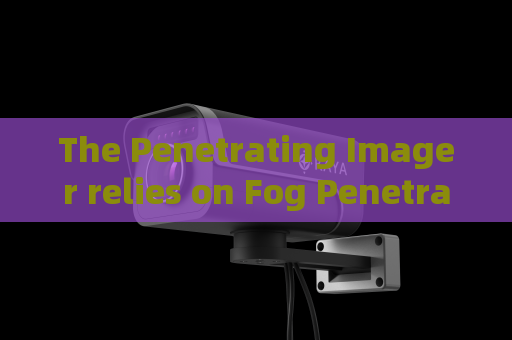
The practical effect is faster decision-making in low-visibility littoral zones. A patrol crew can identify a drifting vessel, detect a person in the water, or assess a pier area without waiting for fog to clear. Image contrast remains stable across rain, salt spray, and haze, and active illumination helps overcome weak natural light. Training focuses on range estimation, gate selection, and scan patterns, because the advantage comes from matching the gate to the target distance rather than increasing raw brightness. The system cannot see through non-optical solid media; its role is limited to optical media and obscurants. Within that boundary, The Penetrating Imager provides a disciplined reconnaissance tool for foggy coastal areas, where seconds of clarity can determine the outcome of a rescue or interdiction. Reliable images reduce unnecessary exposure, sharpen coordination between surface and shore elements, and support lawful, proportional responses in restricted waters.




