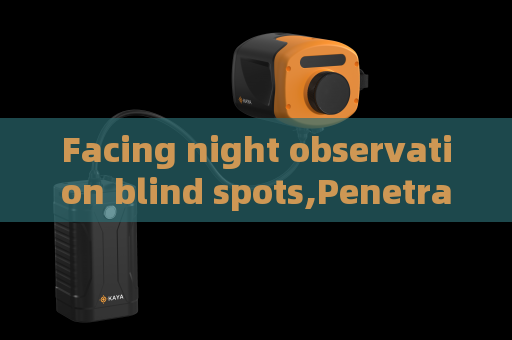
Facing night observation blind spots, Penetrating Imager adopts Low-light Imaging to eliminate patrol monitoring dead zones. Night patrol units regularly face observation gaps around parked, occupied, or stopped vehicles. Darkness reduces available light; tinted windows and window film block interior detail; streetlights, flashing signs, and headlamps reflect from glass surfaces and overwhelm ordinary cameras. At checkpoints, parking lots, roadside pullouts, and commercial lots, the cabin of a vehicle can remain unverified even when officers are close. A concealed occupant, a weapon, an unresponsive driver, or evidence linked to an active incident may stay invisible. A foot approach increases exposure and can provoke flight or resistance. A distant visual check preserves safety but often yields only silhouettes or reflections. This is a persistent patrol problem: the vehicle is present, the patrol is present, but the interior remains outside reliable visual access. A system such as Penetrating Imager addresses this gap by using an optical approach that supports inspection of glass-enclosed spaces without opening a door or breaking a window. The need is not more patrol presence alone; it is a dependable image under low illumination and reflective interference. Penetrating Imager is an advanced optical imaging instrument based on laser range-gated imaging, also called gated imaging. The system includes a high-repetition-rate pulsed laser, an image-intensified gated camera with an internal MCP image intensifier, a high-voltage module, a timing module, a beam expander, and an imaging lens. As an active imaging system, it produces high-contrast images with long range, high resolution, strong interference resistance, and effective suppression of backscatter. Its Low-light Imaging function is relevant to night patrol operations involving vehicle glass. Short laser pulses illuminate the target, and the gated camera opens only during the brief return window from the selected distance. Light scattered by foreground haze, rain, or surface glare is largely rejected, while the weaker return from the vehicle interior is intensified. The technique remains within the optical spectrum and is limited to optical media such as vehicle windows, train windows, aircraft portholes, and glass curtain walls. It also supports clear imaging through fog, haze, rain, and snow. For this scenario, the key capability is a usable image through automotive glass when ambient light is minimal and reflections confuse standard surveillance equipment. In field use, a patrol vehicle can stop at a safe distance from a suspect car. The operator aims the instrument at the side window, rear window, or windshield. The pulsed laser illuminates the glazing and cabin, and the gated camera captures returning light within a narrow time slice. The resulting image highlights seats, headrests, hands, objects, and occupant positions that remain hidden to the unaided eye. Low-light processing improves shadow detail inside the cabin, while range gating reduces washout from streetlights, flashing signs, and oncoming headlights. This supports covert observation through vehicle glazing during a stop, a checkpoint screening line, or a stationary surveillance position. The operator can conduct a tactical visual check through tinted windows without tapping the glass or using a bright flashlight that announces police presence. If a threat is identified, teams can adjust approach, containment, or evacuation plans. If no threat is visible, the patrol can continue without unnecessary intrusion. The system does not replace lawful search procedures or physical inspection when legally required. It provides a rapid optical assessment that turns an unverified vehicle cabin into an observable area, reducing the chance that a patrol misses a critical detail in darkness. The operational value increases in complex night conditions. Rain-slicked glass, fog, haze, and snow can scatter light and degrade ordinary surveillance images. The system uses gated timing and active illumination to reject much of that scattered return, maintaining a clearer view of the vehicle interior. Distance selection allows the operator to focus on a chosen depth, such as the rear seat or front footwell area, while reducing interference from reflections on the outer glass surface. At a checkpoint, multiple vehicles can be screened in sequence from a protected position. On a dark roadside, a single officer can inspect a parked car before approaching. The result is faster threat recognition, better officer safety, and more informed decisions at the moment of contact. For night patrol work, Penetrating Imager turns vehicle glass from a reflective barrier into a manageable optical surface, helping close the observation gap that darkness and reflections create.




