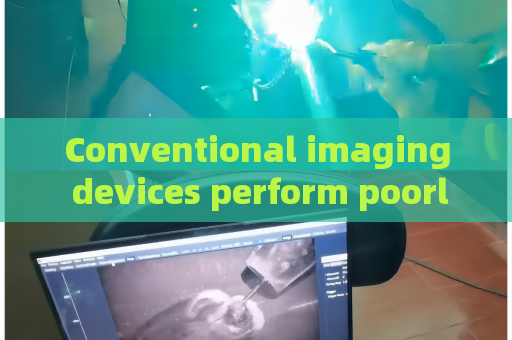
Conventional imaging devices perform poorly in foggy conditions, Penetrating Imager utilizes Fog Penetration Imaging for reliable reconnaissance Fog transforms a familiar patrol route, harbor approach, or border sector into a low-contrast maze. Water droplets scatter and absorb visible light, so conventional cameras lose edge definition, color separation, and target identity at distances that are otherwise well within their clear-weather range. Backscatter from fog particles creates a bright veil that hides pedestrians, vehicles, small boats, and other objects of interest. For law enforcement and emergency reconnaissance, the result is not merely degraded video. It is an intelligence gap: operators cannot confirm whether a shape is a person, a drifting vessel, or a harmless roadside object. Decisions on pursuit, evacuation, or interception are delayed because the optical sensor cannot provide dependable discrimination. The Penetrating Imager is designed for this exact operational failure, where fog turns routine surveillance into an ambiguous and risky task. The relevant capability is Fog Penetration Imaging. The Penetrating Imager is an active optical system that uses laser range-gated imaging, also known as gated imaging. A high-repetition pulsed laser emits short light pulses; a beam expander shapes the illumination across the field of view; an imaging lens collects returning light; and an image-intensified gated camera, built around an MCP image intensifier, high-voltage module, and timing module, opens its shutter for a very brief interval. That interval is synchronized with the expected return time from a selected distance. Light scattered by fog near the camera is rejected because the gate is closed when that backscatter arrives. Light reflected from a target at the chosen range is captured when the gate is open. The result is high-contrast imagery with reduced fog interference, extended useful range, and strong anti-interference performance. This is the function that directly supports reliable reconnaissance in fog. Operationally, a fog-bound coastal or border reconnaissance team can deploy the Penetrating Imager on a tripod, vehicle mount, or vessel station. The operator selects a range gate that matches the area of interest, such as a channel entrance, pier line, or road segment. The pulsed laser illuminates that zone, and the gated camera records only the light returning from that depth. In dense fog, conventional cameras may show only gray haze, while the Penetrating Imager resolves the outline of a moving vehicle, a person at the waterline, or a small boat crossing the sector. The image can be displayed in real time on a rugged monitor and shared with a command post for immediate assessment. Because the system suppresses fog-induced backscatter, the operator gains a clearer view of movement, direction, and number of targets. This supports timely deployment of patrol units, rescue assets, or interception teams while reducing the risk of false identification. The same fog reconnaissance task benefits from repeatable procedures. The range gate is adjusted as the tactical situation changes, allowing observation of near, mid, or far zones without changing the physical position of the Penetrating Imager. Recording and still capture can preserve optical evidence of activity that would otherwise be invisible to standard cameras. In sustained fog, the system provides a stable optical picture that helps commanders distinguish routine movement from a potential threat and allocate limited resources with greater confidence. Its value lies in reliable reconnaissance through fog, not in replacing broader search protocols. When conventional imaging devices perform poorly in foggy conditions, the Penetrating Imager utilizes Fog Penetration Imaging to restore optical awareness across the surveillance sector. That restored awareness is the practical outcome: clearer identification, faster reporting, and safer tactical decisions in an environment where visibility is the primary casualty.




