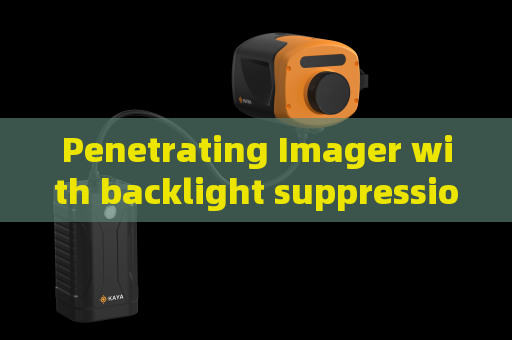
Penetrating Imager with backlight suppression capability for highway checkpoint surveillance to identify obscured vehicles and hidden suspects Highway checkpoint surveillance faces a persistent visual problem when vehicles approach with strong backlight and glazing that hides the cabin. Sunlight low on the horizon, high-beam headlights, reflective licence plates, wet windscreens, and dark tint can reduce a vehicle to a moving silhouette. Officers must decide whether an obscured vehicle contains hidden suspects, a driver in distress, or other risks before the vehicle reaches the inspection point. Standard cameras and human vision are overwhelmed by glare and surface reflections. Tinted side windows, sun visors, reclined seats, and passengers moving below the window line deepen the uncertainty. Rain, haze, and night conditions further reduce contrast. A Penetrating Imager with backlight suppression capability for highway checkpoint surveillance to identify obscured vehicles and hidden suspects addresses this exact tactical gap by producing a clear optical view through vehicle glazing while rejecting intense light that normally washes out the cabin. The relevant function is laser range-gated imaging, also called gated imaging. The Penetrating Imager is an active optical system built around a high-repetition-rate pulsed laser, an image-intensified gated camera with an MCP image intensifier, high-voltage module, timing module, beam expander, and imaging lens. The camera gate opens only for a very short interval synchronized to the selected distance. Laser pulses illuminate the vehicle, and the gated camera collects returning light from the cabin while rejecting ambient backlight and much of the scattered light from glass surfaces. This Strong Light Suppression Imaging capability preserves contrast when headlights, sunlight, or roadside lighting would otherwise blind conventional optics. The system provides high-contrast imaging, long operating range, high resolution, strong anti-interference performance, and effective suppression of backscatter. Its optical path is designed for transparent and partially transparent media such as vehicle windows, windscreens, side glazing, and rear glass. Fog, haze, rain, and snow are optical media that can be managed to maintain a usable image. The system remains an optical instrument for through-glass surveillance at checkpoints. At a highway checkpoint, the imager can be mounted on a tripod, lane-side post, or overhead gantry. An operator selects the range gate for the approaching vehicle's cabin as it enters the surveillance zone. The pulsed laser illuminates the target, and the gated camera returns a high-contrast image of occupants behind windshield or side glass. Backlight suppression allows the view to remain stable when a vehicle's headlights face the checkpoint or when low sun sits behind the vehicle. The image can reveal passenger count, seating positions, body posture, hand movement, and whether a hidden suspect is crouched or concealed behind tinted glazing. This supports through-window tactical observation before an officer steps into the lane. In rain, fog, or night operations, the same active optical approach can maintain visual contact when ordinary cameras lose detail. The result is earlier warning, better stop planning, and reduced surprise during a high-risk vehicle stop. It does not replace physical search or lawful inspection. It provides a rapid optical assessment of what is visible through glass. In dense checkpoint traffic, the imager can scan multiple lanes and record the optical view for later review. Backlight suppression remains useful when queued vehicles keep headlights on or when reflective signage creates glare across windscreens. Hidden suspects behind tinted windows, passengers obscured by seat backs, and drivers attempting to avoid face-level observation become easier to detect within the limits of optical glazing. The equipment can be integrated with existing checkpoint surveillance displays so that commanders receive a real-time view before a vehicle reaches the inspection bay. Its laser range-gated design keeps the image sharp at distance and resists interference from atmospheric scatter. The technology is confined to optical media; it is not a substitute for physical inspection or legal search procedures. Used as an optical surveillance layer, the Penetrating Imager gives checkpoint teams a decisive view through glare, tint, and weather while keeping the focus on obscured vehicles and hidden suspects.




