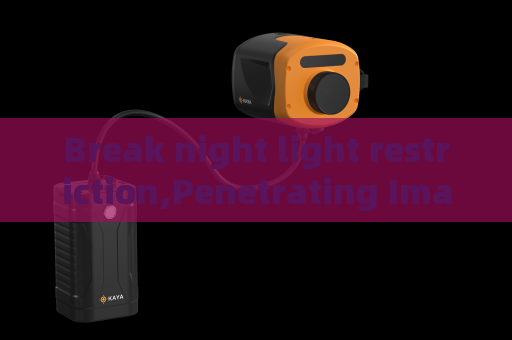
Break night light restriction, Penetrating Imager adopts Zero-light Imaging to realize unrestricted night tactical reconnaissance Night vehicle interdiction places tactical teams in a difficult visual environment. After dark, ambient light falls to near zero. Vehicle glazing is often tinted, dusty, wet, or highly reflective. Headlights, streetlights, and flashing emergency lights create glare and shadow. A conventional camera needs light; a low-light camera still needs some ambient illumination and may fail when none exists. Turning on white light or a searchlight reveals the team's position and changes the subject's behavior. Approaching a vehicle without knowing who or what is inside creates unnecessary risk. The operational demand is clear: maintain standoff, stay covert, and still identify occupants, posture, hands, and visible objects through automotive glass. Any solution must break night light restriction without sacrificing stealth. The Penetrating Imager addresses this exact problem. The relevant function is active laser range-gated imaging, also called gated imaging. The Penetrating Imager is an advanced optical imaging instrument built around a high-repetition-rate pulsed laser, an image-intensified gated camera with an MCP image intensifier, high-voltage module, timing module, beam expander, and imaging lens. It is an active imaging system. The pulsed laser illuminates the scene, and the gated camera opens only for a very short interval timed to receive light returning from a selected distance. This range gating produces high-contrast images, extends effective distance, improves resolution, resists interference, and suppresses backscatter. The system can penetrate optical media such as vehicle windows, train windows, aircraft windows, and glass facades. It also images clearly through fire, fog, haze, rain, and snow. For night work, Zero-light Imaging removes dependence on ambient light. The capability remains within the optical domain. In practical night operations, a team can set up at a covered position and aim the Penetrating Imager at a stopped or slow-moving vehicle. A range gate is selected for the distance to the target glass. The pulsed laser passes through the windshield or side window. The gated camera receives returning light from inside the cabin while rejecting much of the glare and backscatter from the glass surface. The result supports through-window tactical observation: seat positions, head counts, hand placement, and objects on laps or seats become visible in high contrast. The same method supports through-glass surveillance without visible illumination and without opening a door or asking occupants to turn on interior lights. When fog, rain, or wet glass adds scatter, the gating function still favors the useful return from the selected range. This is a focused optical capability for vehicle glazing and similar transparent barriers. It allows a tactical team to assess before moving forward. During a night cordon or checkpoint, multiple vehicles may queue in low light. The Penetrating Imager can scan each vehicle through its glass from a standoff position. Occupants in the front and rear can be distinguished. A driver alone, a passenger leaning forward, or an object held below the window line can be noted before any approach. If rain, haze, or road spray crosses the line of sight, the active gated imaging continues to deliver a usable image because the camera timing rejects much of the scattered light. The system's high-resolution, long-range, anti-interference performance helps operators prioritize which vehicle needs closer inspection and which can be directed onward. The tactical advantage is speed with reduced exposure. Break night light restriction, and the Penetrating Imager adopts Zero-light Imaging to realize unrestricted night tactical reconnaissance. That capability keeps the team at a safer distance, preserves surprise, and turns darkness and reflective glass from a blind spot into a readable tactical picture.




