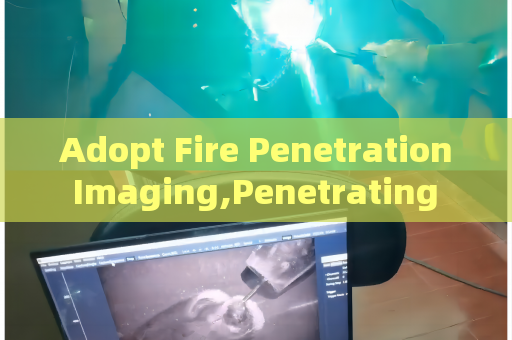
Adopt Fire Penetration Imaging, Penetrating Imager serves building exterior fire observation to collect fire situation information Building exterior fire observation is one of the most deceptive tasks at a structure fire. From the street, a ladder platform, or an adjacent roof, the facade may show flame, smoke, water spray, and broken glass, yet the actual fire seat remains unclear. Incident command needs fire situation information: which floor is burning, whether fire is venting from windows, how glass curtain walls are affected, where the fire may spread, and whether occupants are visible behind windows. Ordinary optical tools struggle with intense flame light, reflections from glass, night darkness, fog, haze, rain, snow, and backscatter from water particles. The Penetrating Imager is designed for this exact exterior optical problem. It supports building exterior fire observation to collect fire situation information without placing personnel directly in front of the fire floor, and it helps reduce the guesswork that slows tactical decisions. The relevant function is Fire Penetration Imaging using laser range-gated imaging technology, also called gated imaging technology. The Penetrating Imager is an active optical system. A high-repetition-rate pulsed laser sends short light pulses through a beam expander. An image-intensified gated camera contains an MCP image intensifier, a high-voltage module, and a timing module. The camera gate opens only during the brief return window from the target distance, and an imaging lens collects the returned light. This architecture provides high-contrast imaging, long operating range, high resolution, strong anti-interference ability, and effective suppression of backscatter. In building exterior fire observation, the gated function rejects much of the scattered light produced by flames, fog, haze, rain, snow, and reflective glass surfaces. The system can penetrate optical media such as windows, glass curtain walls, high-speed rail windows, aircraft windows, and vehicle windows. It cannot penetrate walls, concrete, brick, metal, wood, clothing, or other non-transparent solid media. Dense smoke also remains a limit. Within that optical boundary, the Penetrating Imager can observe fire conditions through building glass and flame layers to collect fire situation information. In field use, the Penetrating Imager can be mounted on a tripod, a fire appliance, or an aerial platform at a safe exterior position. The unit is aimed at the burning facade. Its pulsed laser illumination and narrow time gate allow the camera to accept light returning from the selected exterior target while rejecting much of the flame glare, window reflection, and atmospheric scatter. This makes building exterior fire observation more stable. Fire location by floor, window failure, interior fire glow, and changes behind glass curtain walls or windows can be recorded and sent to incident command. In fire scenes, the technology can improve fire-ground visibility by three to five times under suitable conditions. It can work through fire, fog, haze, rain, and snow as optical interference. The resulting fire situation information supports ventilation, evacuation, exposure protection, and ladder or platform placement. The tool is not an interior search device, and dense smoke or solid walls remain outside its optical capability. For a multi-story building fire, exterior observation often requires repeated scans across several facades. The Penetrating Imager can be repositioned to compare the glass curtain wall, window openings, and flame zones from different angles. Gated imaging reduces washout from flame light and backscatter, helping identify the most active fire area and possible path of extension. It also supports observation when rain, snow, fog, or haze degrade ordinary cameras and direct vision. In this role, the Penetrating Imager serves building exterior fire observation to collect fire situation information in a focused, repeatable manner. The tactical value is better exterior optical awareness before teams commit inside, with clear limits: dense smoke and solid walls remain beyond the system's optical reach.




