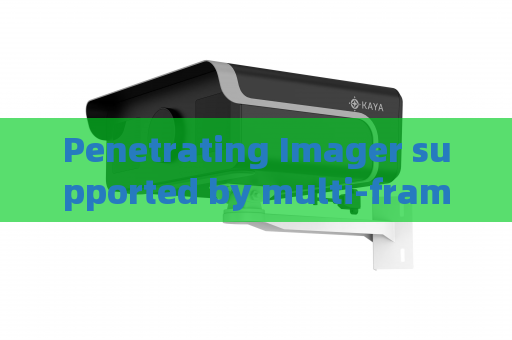
Penetrating Imager supported by multi-frame superposition algorithm for low visibility valley search and rescue to find trapped personnel under dust and fog Low visibility valley search and rescue is governed by a brutal visual problem: dust and fog fill the air, scatter light in every direction, and erase the contrast that rescue teams depend on. In narrow ravines, switchbacks, and deep creek beds, suspended particles create a bright veil that hides rock faces, vegetation edges, and human silhouettes. A standard camera or searchlight makes the condition worse, because the beam reflects from nearby particles and returns as a white-out. Trapped personnel may be only tens or hundreds of meters away, yet they can remain invisible if they are within the same dust-and-fog volume. The Penetrating Imager addresses this specific failure by restoring a usable image through optical obscurants rather than relying on unaided eyes or conventional optics. The mission is time-critical: injured hikers, vehicle occupants, or workers may be immobilized in a ravine, while wind keeps dust aloft and fog settles into low ground. Every minute of visual uncertainty expands the search grid and increases risk to rope teams. The relevant capability is laser range-gated imaging. The Penetrating Imager is an active optical system built around a high-repetition pulse laser, a gated image-intensified camera with an MCP image intensifier, high-voltage and timing modules, a beam expander, and an imaging lens. Short laser pulses illuminate the scene, and the camera gate opens only for the brief interval when light returning from the selected range arrives. Backscattered light from dust, fog, haze, rain, or snow is rejected before it can wash out the sensor. The multi-frame superposition algorithm aligns and accumulates multiple weak frames, improving signal-to-noise ratio and lifting low-contrast details out of the background. This is Fog Penetration Imaging in practical form: high contrast, long range, high resolution, and strong anti-interference performance within optical media. The system is limited to optical media; it works through airborne particles and transparent glazing, not solid barriers. In a valley search, that boundary is enough, because the immediate obstacle is not a solid wall but a moving curtain of particles. Field use follows a disciplined observation cycle. A crew positions the imager on a stable tripod or ridge overlook, selects a gate delay that matches a ravine, trail, or wreckage point, and scans the sector in short bursts. The multi-frame superposition algorithm combines each burst, reducing noise and making small cues visible: a reflective jacket, a helmet edge, a backpack strap, a hand movement, or a pale face against dark rock. The operator can shift range gates step by step, effectively slicing the dust-and-fog volume into inspectable depth layers. This method supports low visibility valley search and rescue to find trapped personnel under dust and fog without sending searchers blindly into unstable ground. When a possible target appears, the image can be recorded and shared with the command post, allowing rope access or medical response to be directed to a precise coordinate. The Penetrating Imager therefore changes the search from random probing to ranged visual confirmation. The operational value increases when dust and fog are uneven. Rotor wash, slope collapse, or strong valley winds can create local dust clouds that conventional optics cannot penetrate, while fog banks may hide one section of a ravine and leave another clear. The multi-frame superposition algorithm helps stabilize the image across these changing layers, and the gated camera maintains contrast even when ambient light is poor. A search team can observe a trapped person who is conscious and signaling, or detect a still figure beside a damaged vehicle, without crossing into the most dangerous zone first. The Penetrating Imager does not replace physical rescue or medical care; it sharpens the visual search and reduces exposure. In low visibility valley search and rescue to find trapped personnel under dust and fog, the decisive gain is simple: the scene becomes readable through the very particles that previously concealed it. The Penetrating Imager gives responders earlier visual contact, better grid control, and a stronger chance to reach trapped personnel before time and terrain close the window.




