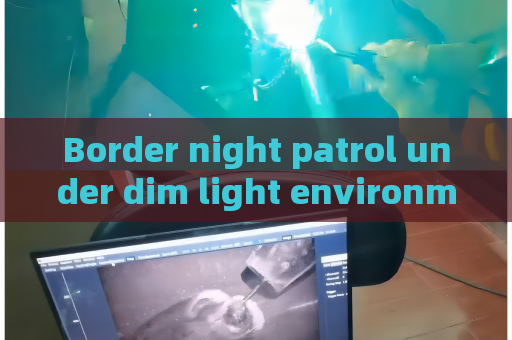
Border night patrol under dim light environment, Penetrating Imager relies on Zero-light Imaging to carry out full-time monitoring At a border line after midnight, the real problem is not a lack of personnel but a lack of reliable visual information. Dim light, moonless conditions, rain, fog, and snow reduce contrast. Vehicles approach with lights off; window glass reflects headlamps, checkpoint lights, and ambient glare. Officers need to know who and what is inside a vehicle before opening a door or stopping it, yet ordinary optical tools lose detail in the dark. Illegal crossers and smugglers exploit this gap, using vehicle glass, tinted windows, and bad weather to hide movement. The patrol must watch a road, a river crossing, or a mountain track for hours, yet human eyes and standard optics cannot maintain reliable detail when illumination drops to near zero. The Penetrating Imager addresses this specific patrol pain point: continuous observation in a dim light environment where conventional sight fails. Without a stable image through glass at night, border patrols face delayed decisions, unsafe stops, and broken coverage along remote routes. The Penetrating Imager is an advanced optical instrument using laser range-gated imaging, also known as gated imaging. It combines a high-repetition-rate pulsed laser, an image-intensified gated camera with an internal MCP image intensifier, high-voltage module and timing module, a beam expander, and an imaging lens. As an active imaging system, it sends pulsed light and accepts only the returning light from a selected distance. This range gating suppresses backscatter from fog, haze, rain, snow, and reflective glass surfaces, producing high-contrast images at long distance with high resolution and strong anti-interference performance. For border patrol, the relevant capability is Zero-light Imaging: no ambient illumination is required to see through vehicle windows, high-speed rail windows, aircraft portholes, and glass curtain walls. The instrument works through optical media such as glass and is not disturbed by fire, fog, haze, rain, or snow. At a checkpoint or a covert observation post, the operator can conduct through-glass surveillance on a vehicle while it is still moving or waiting, checking occupants and visible items without opening a door. In practical border night patrol, the Penetrating Imager can be mounted on a patrol vehicle, a fixed tower, or a mobile checkpoint. When a suspicious vehicle enters a dim light environment, the camera is aimed at the side or rear windows. The gated image appears on a monitor, showing the number of occupants, their posture, and the outline of bags, boxes, or concealed items behind the glass. Because the system is active and gated, it continues to form images under rain, fog, and snow, and it resists the glare that normally washes out window details at night. Full-time monitoring becomes possible along a road, a riverbank, or a mountain pass without adding visible floodlights that would warn intruders. The effect is faster target assessment: officers decide whether to stop, follow, or hold position based on a clear through-window tactical observation rather than a guess. A patrol team can keep the device on a fixed lane, scan each approaching vehicle, and record the image for later review. The same capability supports through-glass surveillance of buses and commercial vehicles, where multiple windows must be checked quickly while traffic keeps moving. Along remote border sectors, the value of the Penetrating Imager lies in sustained coverage. A dim light environment changes by the minute: clouds cover the moon, fog rolls in, rain streaks across glass, and vehicle lights create sudden glare. The instrument’s range-gated active imaging keeps the operator focused on the selected distance, so foreground reflections and weather scatter do not dominate the picture. The operator selects the range gate according to the distance of the target vehicle, reducing foreground glare from barriers or roadside lights. Checkpoints can run full-time monitoring with fewer blind periods, and patrol teams can verify vehicle interiors through glass before approaching. The Penetrating Imager therefore turns a difficult night patrol problem into a manageable visual task: illegal movement behind vehicle glass is detected earlier, response is better informed, and border control maintains watch through darkness, weather, and reflective windows.




