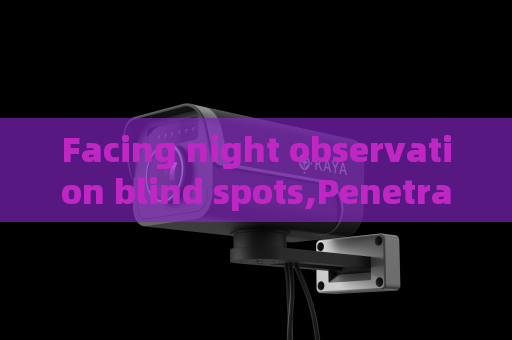
Facing night observation blind spots, Penetrating Imager adopts Low-light Imaging to eliminate patrol monitoring dead zones At night, patrol monitoring dead zones often appear around stopped or moving vehicles whose cabin interiors remain hidden by tinted automotive glass. Street lighting is uneven, headlights create harsh glare, and window surfaces mirror nearby lamps instead of revealing occupants. Officers approaching a vehicle cannot quickly confirm how many people are inside, where hands are positioned, or whether movement suggests a threat. A flashlight improves visibility only by broadcasting the patrol unit’s presence, and reflected light can worsen the view through dark glazing. The result is a dangerous observation gap exactly when time and distance matter. Facing night observation blind spots, Penetrating Imager adopts Low-light Imaging to eliminate patrol monitoring dead zones by addressing this optical barrier without requiring an immediate door opening or close approach. The relevant capability is low-light imaging inside a laser range-gated imaging architecture. The Penetrating Imager is an advanced optical imaging instrument. It consists of a high-repetition pulsed laser, an image-intensified gated camera with an MCP image intensifier, high-voltage module, timing module, beam expander, and imaging lens. The system is active: pulsed light is expanded and projected toward the target area, and the gated camera opens its shutter only for a selected time window. Returns from the vehicle window surface and atmospheric scatter arrive earlier or later than the cabin signal, so the timing module rejects much of that interference. The MCP image intensifier then amplifies the weak optical return from the cabin. This produces high-contrast images with long range, high resolution, strong anti-interference performance, and effective suppression of backscatter. At night, the operational value is direct. Low-light Imaging lifts faint cabin details out of darkness while gated timing reduces glare and reflections from glass. The result is a clear optical view through automotive windows, allowing occupants, seating layout, and hand positions to be assessed from a protected distance. At a night checkpoint or patrol stop, the imager can be mounted on a vehicle or tripod and aimed at a suspect vehicle’s cabin. The operator sets the gated range to the window-to-interior distance and adjusts gain for the available light. through-window tactical observation can then be performed before officers leave cover. Tinted glass no longer forces a choice between standing off and seeing nothing. Rain, fog, haze, or snow may reduce ordinary visibility, but the active gated design uses timed pulsed light and amplified return to keep the cabin image usable. The system remains an optical tool: it works through glass and other optical media. During a stop, the image helps confirm occupant count, seating positions, hand placement, and sudden movement. It supports safer approach decisions, clearer radio descriptions, and better positioning of patrol units around the vehicle. When multiple units are present, the same image can guide containment, communication, and timing of the contact. Operationally, low-light imaging changes the rhythm of night patrol. Instead of opening a door, tapping glass, or using a bright white light that alerts everyone, the crew can conduct a rapid optical check from a protected position. The gated image can be recorded or transmitted to a supervisor, giving a shared view of the cabin before a tactical decision is made. In repeated patrol use, this reduces exposure, shortens the time spent in uncertainty, and closes the coverage gap that dark windows create along night routes. The system does not replace officer judgment or standard tactical procedures; it adds a reliable optical layer that makes hidden interiors observable when lighting is poor and glass reflects the surrounding scene. For agencies facing night observation blind spots, the Penetrating Imager with Low-light Imaging offers a focused way to eliminate patrol monitoring dead zones around vehicle glass while keeping the approach safer, more informed, and better documented.




